Showing posts with label activities. Show all posts

Tuesday, August 23, 2011

Six Favorite Educational Toys

 1. Busy Bugs

Busy Bugs are all about math, including patterning, colors, addition, and subtraction. Both of my children have adored playing with them for years. Owning these darling and brightly-colored bugs means I sit back and wait for my children to ask me for math - er, busy bugs.

2. Rainbow Fish Lotto

I posted a short review of this game here! My three favorite things about it are: 1) It's based on a storybook, 2) the pictures are bright and beautiful, and 3) even a just-turned-two-year-old can play it.

3. Kumon First Steps Workbooks

These don't sound like toys, but the First Steps workbooks (for ages 2 and up) may as well be. There are Kumon workbooks for older ages, too. We have an ages 3-4-5 workbook which has been received with good grace but not the happiness with which the smaller workbooks were greeted. For ages 2 and up, we have tried Let's Cut Paper!, More Let's Cut Paper!, and Let's Sticker and Paste!

My son went from not knowing how to correctly use scissors to becoming a cutting expert! I have to stop him from finishing these books in one sitting.

4. Stringing Beads

Any type of stringing beads is a great educational toy, useful for fine motor skills and patterning. The Melissa & Doug set pictured below in the carousel has good reviews.

Fun & Engaging Activities for Toddlers, a fantastic toddler learning activity blog, has some great ideas for making your own stringing beads.

5. Magnadoodles

My children never got obsessed with these like they did with other toys, but they always liked drawing on them even when they didn't want to draw or write on paper. I have a hunch it's easier in terms of fine muscle strength, but that's just a guess. It also seems a little bit more like magic to them when the marks appear on the Magnadoodle board. My older son wrote his first letters on a large Magnadoodle.

A chalkboard, dry erase board, or yogurt on a baking sheet can all serve the same purpose, if your child likes those surfaces. They are interesting, somewhat unusual, and often easier than writing or drawing on paper.

6. Puzzles

Puzzles are simply classic. There are so many different types of puzzles out there, and levels of difficulty for any ability.

Something like the Melissa & Doug Jumbo Fishbowl Puzzle pictured below is great for babies, to get them used to the idea of puzzles and to increase their fine motor skills using the knobs on the pieces (manufacturer recommended age 1-3 years).

Other than the pick-up of 26 small pieces, we like the Melissa & Doug See-Inside Alphabet Peg Puzzle for toddlers and preschoolers (about age 22 months and up at our house, but the manufacturer says 3 years and up due to choking hazard).

The Crocodile Creek Jungle 123 7 Foot Floor Puzzle was a fantastic first jigsaw puzzle for our preschooler. It was an easier jigsaw, but just challenging enough to keep him interested for years:

I also highly recommend the Melissa & Doug Dinosaurs 48 Pcs Floor Puzzle for this level.

A high quality puzzle that was perfect for the next step was Ravensburger's 35-piece Dinosaur Playground (manufacturer recommended ages 4-15 years):


Wednesday, August 10, 2011

Unplanned Learning Activities


Some examples of unplanned learning activities that took place in our home yesterday, during what I would call an "off" day:


1. Going outside as the light grew in the morning sky, listening to the birds, (me) drinking coffee on the porch, (two-year-old) blowing bubbles.


2. Following along and helping with my chores.


3. A big sing-along of Twinkle, Twinkle, Little Star, Farmer in the Dell, and the ABC song.

www.clker.com


4. Color sorting, grouping, and free play with loops from a weaving loom set that just happened to be out on the table.


This is the kind of morning I would call a productive, happy learning time, even though I felt "off" and scrapped the usual planned learning activities.

Friday, August 5, 2011

Car Drawing

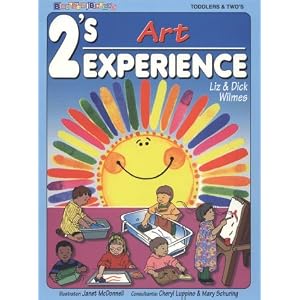
Yet another idea from 2's Experience Art was enjoyed by the boys and me. We started with crayons taped to the cars, as instructed by the book, but it was hard to get them in the right position to make a mark. Markers (washable ones) worked much better for us.


My toddler loved this activity. My almost-kindergartener was gleeful about it until we finished and cleaned up. Then he was very disappointed in the product, saying it wasn't a real picture. I assume he has entered his objective art phase: nothing abstract will do right now.


Monday, August 1, 2011

Hurricane Tracking with Children

Storms, maps, colored pencils, and time with Dad = Great Idea!

http://www.nhc.noaa.gov/HAW2/english/history.shtml


My husband had the idea to print out and laminate a hurricane tracking map to track hurricanes with our son this season. He found a hurricane tracking teaching strategy website here. Apparently there is a set of standards for what color to use for what type of storm.

He put the hurricane tracking map on a thumb drive and got it printed out poster-size and laminated by a printing store for $14. (It would only have been $3.50 to print out the poster, but with a laminated chart, we can use it again each year.)

We already have several colors of dry-erase markers that can be used to color-code the storms.


Using weather.com, I read off the coordinates for the tropical storms that have been seen so far this year while my husband marked them on the chart. During the process, he taught our son about latitude, longitude, hurricane trajectories, and some geography.

Next time, it will be our son's turn to help!

Wednesday, July 27, 2011

Jam Jar Lantern

Here is a simple craft we did from this month's Parenting: The Early Years magazine:


The instructions say to have the children use watercolors on watercolor paper, using only two colors for best results. My children really love the water aspect of watercolors, so our colors were not as vibrant as they could be.

Cutting shapes out of the paintings could be done by an adult or a child who knows how to cut, and there is no limit other than time and ability for what shapes to use. The magazine article recommends using hole-punchers for the shapes, but we didn't have any large ones.

We used an empty, clean jam jar instead of a mason jar.


This is our finished product, which made my older child very excited. It now serves as our centerpiece.

Here is the link to the full craft article on Parenting's website. You will see some vibrant colors there!


Friday, July 22, 2011

Simple Water Table Coloring


A simple spring or summer activity: Transform the water/sand table into an art canvas. This is another activity adapted from the book 2's Experience Art by Liz and Dick Wilmes. A roll of paper is placed over the table and taped to the sides. I simply put the paintbrush markers in one of the smaller water compartments of the table, right underneath the paper but visible and reachable. The purpose of this activity is to liven up coloring time for little ones and show them the fun of experimenting with art venues and materials. In the book, this is meant to be a crayon coloring activity, but in our area I don't think crayons would last more than five or ten minutes outside before melting down.


The book looks very unsophisticated and, in fact, it is. It does not give academic explanations for the different activities. Many of the activities are simple. However, I love this book. It is perfect for two-year-olds, just at their level, yet keeping them learning.

I really like the beginning pages that show some different ideas for displaying children's art. With inspiration from this book, my husband hung a stuffed animal hammock in the upper corner of our toddler's room to which we safety-pin his art projects. I believe displaying children's works has a great impact on them and gives them motivation to keep learning and mastering activities.
Photobucket

Monday, July 11, 2011

Storybook Week 10: Make Way for Ducklings


Make Way for Ducklings was written and illustrated by Robert McCloskey. This is one of the classics that is a delight to hold in your hands while looking at the wonderful illustrations.

1. Read the Story
Language Arts
 
Read the book Make Way for Ducklings, or watch the storybook video, or both. Take your time and enjoy this classic book.

Although, in my opinion, there is nothing that can replace a book, the storybook videos in Scholastic's Treasury of 100 Storybook Classics are well-done. What I like about them are the slow pace, the animation in the style of the original illustrations, and the use of the original text of the books. Each of these videos is more like the experience of a read-aloud than any video other I have seen.

2. Nesting
Story Interest/Dramatizing/Science

With your child, explore the house for just the right spot to make a nest. When your child has found the exact right spot, mark it with a pillow or anything else that comes to hand.

Now, together you must collect the materials for your nest. Younger children will need your suggestions of using pillows, blankets, etc., for next materials. Older children will most likely have plenty of their own ideas.

Make the nest, and sit on it, of course. If your child wants eggs to sit on and to hatch, crumpled and shaped paper works well. If you have miniature bird figures at home, they can even be inserted into the middle of an egg.

Optional: After doing the activity, watch a video of birds making a nest. Discuss the things you did to make your nest that were similar and different.

3. A Second Breakfast of Peanuts
Story Interest/Fine Motor Skills

All who are not allergic to nuts and who are old enough to eat them can have a "second breakfast" just like the Mallards'. Raisins could also be used instead of nuts.

Get out a jar of peanuts and pour them into a container with a wider opening. Give your child a  bowl for his or her peanuts, and a pair of tongs or tweezers. With the tongs or tweezers, your child should practice transferring peanuts to the snack bowl. Depending on the utensils and the child, this might be a challenging activity. A small measuring cup or spoon can be substituted for the tongs or tweezers.

4. Make Way for Ducklings Interactive Map Activity
Social Studies/Geography

Use this amazing interactive map to take the journey the Mallards did!

5. Police Officers to the Rescue
Social Studies/Dramatizing

Using rubber duckies and a road made of blocks, car tracks, or a road drawn on a piece of paper, have your ducks try to cross the road. A line of Matchbox cars or other vehicles waiting to the side heightens the sense of danger.

Have your child, the police officer, stop all traffic with a commanding hand so the ducks can safely cross. This police hat and badge printable would help your junior officer(s) a lot!

Sunday, July 10, 2011

DIY Chef-In-Training Custom Cookbook


Okay, when I post Do-It-Yourself projects of my own making, you can bet that they will be super-simple and super-quick. Otherwise, I would probably fail at them.

I also dislike spending a lot of money on a craft (except knitting! I will spend more on knitting projects), so the materials must be easy and inexpensive to acquire.

This project was inspired by my creative son and took almost no extra work to put together.

Background: My five-year-old keeps coming up with ideas for creative foods to make and asking that we cook them. They are creative enough that most of the time we wouldn't be able to make them right then and there. I finally decided I wanted to encourage this creative cooking streak, so I did the following:

Image courtesy of clker.com


1.) Bought a spiral-bound index card notebook. (Like this*, although ours is 3" x 5.)

2.) Told my son the plan and got his go-ahead.

3.) Decorated/labeled the book. My son wasn't into decorating it at the time, otherwise we could have really gone to town on it.

4.) Wrote headings on separate index cards for his recent suggestions that I remembered.

5.) Planned a time to make the recipes, one by one, over time.

These are the names of a few of his recipes: Fruit Salad Pizza, Doughnuts (decorated just like Arnie - see this book*), Yogurt with Sprinkles, Chocolate Sauce Bananas.

I think this would be one of my best ideas yet, if it were my idea. Thanks, son!


Photobucket 

*Afterschool Homeschool is now a participant in the Amazon Services LLC Associates Program, an affiliate advertising program designed to provide a means for sites to earn advertising fees by advertising and linking to amazon.com. Where I have noted that I do not receive compensation for reviewing or linking to an item, that is true and means that the relevant link is not an affiliate link. 

Friday, July 8, 2011

Winter Fun In the Summertime: Movie Marathon

Image courtesy of clker.com


At the beginning of summer, I posted an idea to have winter fun in the summertime when it gets dangerously hot out there. Yesterday we put into action #5: the (Indoor) Movie Marathon.

After swim lessons in the morning and a sweltering trip to Target, I decided I wouldn't put the children out to play in this heat.

We have young children, so rather than choose a theme of favorite summer or winter movies, I allowed each one to choose a movie. I closed all the blinds, put popcorn in the microwave, and set them on the couch with the first-choice movie. Whew! An air-conditioned house feels really fabulous after a car ride.

If you start to feel guilty about plopping the youngsters in front of the TV, go all out with the theme of the movie and put fun themed props on the coffee table in front of them. My children spend just as much time playing pretend as watching the movie. Oh, and they also spend a lot of time on serious popcorn-munching.

Caution: The American Academy of Pediatrics lists popcorn as one of the foods that poses a high risk of choking among children.


Image courtesy of clker.com

It's not that my little ones aren't watching TV anyway at certain times of the day, but I always feel better when our mindless activities are scheduled in. Do you?

Thursday, July 7, 2011

How Do Dinosaurs...? Puzzle Activity

For anyone doing the How Do Dinosaurs Say Goodnight? Storybook Week (or anyone whose children love dinosaurs), this activity from Crafts~N~Things for Children is a spectacular, easy addition. I love it!

Because my children love both dinosaurs and puzzles, and because I have all the necessary materials (hurray!), we will be doing this activity posthaste.


Find the full How Do Dinosaurs Say Goodnight? Storybook Week here, at the link above, or in the Storybook Weeks sidebar.

Saturday, July 2, 2011

I Stink! Storybook Activity, Documented

We are doing the Read. Explore. Learn Summer Reading Challenge today. (See the badge to the right.) I'm so excited about it!
 

In Your Community
Social Studies/Story Interest/Arts and Crafts


This is part of Afterschool Homeschool's Storybook Week on I Stink! by Kate McMullan. (See my disclosure about affiliate links below.)


"Talk about your community: Do you see police officers in your community? Fire trucks? Where are the library, city hall, fire station, grocery stores, haircutting shops, and post office? Do you see garbage collectors in your neighborhood? What do they do? Where does your trash go?

Set up a play community using building blocks. Or, if you have them, use play sets. Here is one that we used for a while. And here is a great idea for building a Safety Town out of cardboard boxes, paper, glue, and markers or crayons. (The craft idea is at the end of part two of this great safety tips video. It is not step-by-step instructions, just a demonstration of what the children made. They use cardboard boxes of different sizes, glue white paper onto the surfaces, and allow the children to decorate them into whatever "safer buildings" they like.)"

We used our wooden blocks to make a town. It had a fire station, police presence, roads, and a garbage truck that was going around picking up "trash cans" (tiny Lego barrels work well if you can use them around your children without them being lost or swallowed).


The children liked this activity. What they really liked was reducing the town to this:

Then it could evolve into a castle (with their dad's help):

Which could then be joyfully reduced to this:


Afterschool Homeschool is now a participant in the Amazon Services LLC Associates Program, an affiliate advertising program designed to provide a means for sites to earn advertising fees by advertising and linking to amazon.com. Where I have noted that I do not receive compensation for reviewing or linking to an item, that is true and means that the relevant link is not an affiliate link. Thank you for visiting Afterschool Homeschool!

Friday, July 1, 2011

Bubble Painting In the Great Outdoors

This idea was adapted from the book 2's Art Experience, by Liz and Dick Wilmes.


What we did was to tape up a few pieces of white paper on our backyard fence. I used duct tape; it stayed up for a few hours.

Before we started the activity, I opened two small bubble solution containers. I put 1/8 teaspoon food coloring in each container (one for each child, different colors for fun), put the caps back on, and shook them up. After pouring the colored bubble solution into the no-spill dispensers (which I love for my toddler and even my preschooler), we were ready to go.

By the way, if you don't have any bubble solution right now, here is a simple recipe.

Tip: Have your children wear clothes that can get stained. This is not the messiest of activities, but a bit of colored bubble solution will probably end up on their clothing.

The children blew colored bubbles onto the paper, making faint circular bubble splatters.


The bubble splatters do not make a very dark "painting," but my children enjoyed doing the activity and were proud of their results. Because we were experimenting, I used paper that had already been printed on one side (as you may be able to see). If cardstock were used, this activity could make some pretty, delicate, handmade notecards.

Perhaps my favorite aspect of this activity was the way it enticed my children outdoors.
 

Wednesday, June 29, 2011

The Easiest (and Most Polite) Children's Thank You Notes

Margaret Shepherd, in her book The Art of the Handwritten Note, has this to say about thank you notes: "Party or no party, birthday gifts require a thank-you note written by you in your own handwriting. 'Fred says thank-you for the Ferrari,' is acceptable only if the car is two inches long and Fred is still in diapers."

What about children who cannot yet write in their own handwriting? Artwork is often welcomed by the gift-giver, as are photos, especially of the child using the gift.

I have to thank my mother for the following easy children's thank-you note idea.

Cut a length of paper (butcher paper, for example) to fit a low craft table. Tape the edges of the paper to the table so that it won't move around when it is colored. Supply whatever craft materials you would like your child to use. Ready, set, go! Let your child color and decorate to his or her heart's content.


When your child has finished, cut the long paper into notecard sizes. You might also write "Thank You" along the side of each card, or your child's name and the date.

You should now have between 20 and 40 customized notecards to use the next time your child receives a gift.

Thank you, Mom!

Saturday, June 25, 2011

The Rainbow Fish Lotto, A Toddler and Preschooler Game


I recently found The Rainbow Fish Lotto at a used bookstore near our home (Half Price Books). It was a low-enough price that I decided to risk buying it to see if it was a good gateway game for our two-year-old.

The game consists of four cards with several images from The Rainbow Fish story printed on them. There are smaller cards with one image each from the story. A basic way to play is to give each player a large card and place the stack of smaller cards in front of everyone. Someone (maybe Mom or Dad) picks up a card from the pile and each player looks to see if it matches one of the images on their larger card.


The box says the game is for ages 3-6. We found good ways to use it with a just-turned-two-year-old who could match the pictures.

For other skill levels, the game can be simplified or made more complex. There are two different versions specified in the game instructions and when playing the game it is easy to think of different ways you might want to use the cards. One way, which a toddler will quickly discover, is to take out all the cards, look at them, and then put them back in again. And repeat.

Speaking of toddler play, one of my favorite things about the game is the sturdiness of the cards and the game box and lid. This type of game could easily be made at home by printing out pictures from a storybook and cutting and arranging them. However, the game we bought will live through toddler play for quite a while.

And of course, this would be a great activity after reading The Rainbow Fish by Marcus Pfister.

(I don't get any compensation from this review of the game; I just liked playing it with our toddler. :)

Wednesday, June 15, 2011

Night-night, Dinosaurs

Two days ago, I posted a Storybook Week post for How Do Dinosaurs Say Goodnight? Here is a picture of the result of one of those activities at our home:

Sweet, aren't they?

Monday, June 13, 2011

Storybook Week 8: How Do Dinosaurs Say Goodnight?

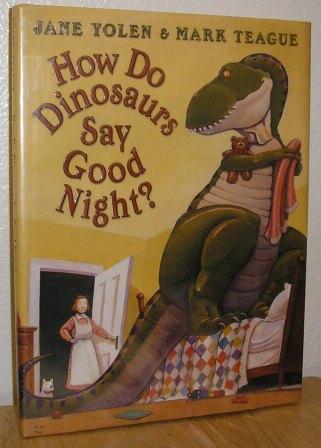
How Do Dinosaurs Say Goodnight?, one of a series of marvelous, fantastic, wonderful books starring dinosaurs, was written by Jane Yolen and illustrated by Mark Teague.

customer image from Amazon.com


1. Read Aloud
Language Arts

Read the story to your child and/or watch the storybook video.

2. Tuck in Dinosaurs
Story Interest/Pretend Play

Make a cozy box, container, or doll bed into a bed for some toy dinosaurs. Use dinosaurs you already have at home or print and cut out pictures of dinosaurs. Don't forget pillows, blankets, and teddy bears! Let your child soothe dinosaurs who are stomping, roaring, or crying. Show your child how to read a story and give hugs and kisses and tell the dinosaurs good night.

3. Dinosaur Roar!
Outdoor Activity/Dramatizing

This is a good opportunity to teach outdoor voice versus indoor voice. Tell your child dinosaurs are allowed to whisper inside the house. Practice whispering. Then say that they are allowed to roar when they are outside!

Go outside and practice roaring at the top of your lungs. Try a Velociraptor roar, then a Tyrannosaurus roar, then a Brachiosaurus roar. Do they sound different?

4. No Jumping on the Bed
Gross Motor Activity/Dramatizing

Lay a rug or mat out on the floor. Put pillows at the head. Pretend to be naughty dinosaurs jumping on the bed. Jump up and down on the mat. (If you are putting the rug or mat on a smooth floor, be sure it won't slide and cause accidents.)

When you are done being naughty dinosaurs, lay down and pretend to sleep. Older children might like to snore or learn to pretend-snore.

5. Teddy Bear Toss
Gross Motor Activity

Take a laundry or other type of basket and place it somewhere in front of a couch that your children can sit on. This game is fun with more than one person, if possible. Place a pile of teddy bears (and other stuffed animals, if you like) next to your children. Have them take turns tossing a bear into the basket. Encourage them to get the bears as close to the basket as possible, if not inside it.

Caution: If you are in the middle of teaching a baby or young toddler not to throw things in the house, you may want to adapt this activity. Place the pile of bears on the floor next to the basket and announce that it's clean-up time! The bears all want to go inside! Then take turns placing bears nicely into the basket. When you're finished, the basket can be dumped out and you can start again.

This activity is great for babies who can sit up and throw (or drop) things. It is also great for toddlers, preschoolers, and young siblings playing together.

Additional Ideas:

I just found this post on a Dinosaur Theme Week at one of my favorite blogs, Children's Learning Activities. Dig in to these ideas!

Also see my post highlighting the Dinosaur Popsicle-Stick Puzzle activity from Crafts~N~Things for Children for a great activity that is easy to do.

Thursday, June 9, 2011

Guest Post at The Steady Hand: The Toddler Dress-Up Game

I don't think there can ever be enough easy, quick activities in the repertoire of toddler parents, do you? Invention, quick wits, patience, and childlikeness are all great tools for the toddler-parent toolbox. And snacks. And soft, bouncy walls and floors.

The Steady Hand has posted my Toddler Dress-Up Game today, so if you have a curious, busy toddler take a look!

Monday, June 6, 2011

Summer Reading Programs

In our area, there are several summer reading programs for children to earn small prizes by reading books (or having books read to them). My oldest is only five years old, so he is not eligible for Pizza Hut's Book-It! program yet, but that is always a fun one, too. My younger son is only two years old, but almost all of the programs I have seen welcome children this age who are having books read to them.

The two main things to consider when enrolling are:

1.) Will this program be fun for my child? (Or, will it kick-start some reading interest in my child if my child has none right now.) My children like books, so I want to be careful not to turn reading into a big chore for them.

2.) What are the prizes? If the prize is a shirt that only comes in large sizes, there is not much reason to sign up your toddler. If it is a bookstore voucher, you could easily use the prize on any age child.

Look for reading programs at local bookstores and grocery stores as well as your library. This morning our local library kicked off a summer reading program...and Clifford the Big Red Dog and Curious George showed up! There was a coloring page to go with the theme that both boys finished:


We are now signed up for three reading programs, which is more than enough to keep track of. It can be a good idea to sign up for more than one if you and your children will finish one of them early. For example, one of our reading programs asks for ten books that your child has read over the summer. We are still reading lots of picture books along with some chapter books, so this program will be very quickly completed.

Thursday, June 2, 2011

"Yes!" Day

The idea of "Yes!" Day came from another blogger or blog commenter whom I cannot find again. I think the idea was posted on Inspired to Action or Wonder Woman Wannabe; both of those article links are fantastic reads for parents needing a bit of inspiration around having fun with their children.

Every child-parent relationship needs a "Yes!" Day at least once a year. On "Yes!" Day, the parents say "Yes!" to all of their children's requests (with some exceptions).

I command...ice cream cones!


Implementation is simple, and there are only three preparatory steps. And one of the steps is optional!

Prep. Step 1:

Brace yourself to say yes to children's requests that you would normally and automatically say no to. While you are bracing yourself, make a list of things that you will not be able to say yes to due to safety hazards or monetary constraints. Think of a fun way to say no to those things, like, "Yes when you are sixteen years old!" or "My mouth cannot say yes because I love to see you alive and unharmed!" Make it a silly "no" if you think that will be appropriate for your child. If you think your child will manipulate "Yes!" Day and spend all day asking for things to see just how much he or she can get, you may want to write and post a list of things that the child may ask for on this special day, and check them off as the child asks for them.

Prep. Step 2: 

Tell your child the day before that you are celebrating "Yes!" Day tomorrow. That means whatever the child requests to do or have, within reasonable limits, will be granted. Share with your child the list of things you cannot say yes to and explain the reason. Younger children will need more preparation with lots of examples of things you will say yes to (that you normally say no to) and lots of examples of things that you will not be able to do.

Prep. Step 3 (optional):

You may or may not want to stock some supplies for "Yes!" Day, like ice cream and cones or new bubbles or a dirt or water toy or a movie rental. Or you can just wait until the child asks for something on the day, and then go get it. The latter strategy could be helpful in limiting the number of requests if you fulfill them one at a time. On the other hand, it might use up extra gas for the car and give your child innumerable new ideas at the shops!

Hint 1: Take pictures of "Yes!" Day and then display them around the house.

Hint 2: A "Yes!" Day is beneficial in proportion to how different it is from daily life. By this I mean that most of children's days should be limited by reasonable, age-appropriate, and parent-set boundaries to keep them safe, secure, and learning about the world. A "Yes!" Day can then be a parent's way of acknowledging that pure and simple fun is a good thing, too.

Wednesday, May 18, 2011

A Sensory Experience Craft

Aprile at The Steady Hand recently did a review of the Deluxe Textured Craft Kit from 1-2-3! Textured Products. If you have a child who would benefit from working with a variety of textures, this kit or something similar could be a great activity.

This kind of kit is also something that could be made at home after collecting a variety of materials from craft stores and around the house.

If you go to The Steady Hand's post, you can see how she and her daughter used the Hugs the Hippo kit.
Related Posts Plugin for WordPress, Blogger...