Showing posts with label babies. Show all posts

Thursday, September 15, 2011

New Commitment to Teaching the Basics at Home

Image courtesy of Capture Queen with Creative Commons licensing.

Since my oldest child started kindergarten, I am reminded how much depends on a foundation of the basics. School teachers want children to be able to:

  • Follow directions.
  • Sit still.
  • Color a picture.
  • Write their names.
  • Recognize their names.
  • Button, unbutton, zip, open, and close clothing, backpacks, and containers when necessary.
  • Tie their own shoes or use velcro.
  • Listen to stories.
  • Share objects. Or keep items separate when they belong to different people.
  • Share their thoughts in an orderly way (e.g., raising their hands and waiting until called upon).

These are extremely basic skills! I highly recommend the Children's Learning Activities blog for basic activities that prepare children, bit by bit, for a structured learning environment.

Specific things "our" kindergarten teacher wants parents to ensure:

  • That children get enough sleep each night.
  • That children eat breakfast.
  • That children use the restroom before school.
  • That children can tie or fasten their own shoes.
  • That children wear the appropriate shoes and clothing for playing and physical education.
  • That any money children bring to school is for a specific school purpose.
  • That children know how they are getting home at the end of the day.
  • That children can pack their own backpacks.
  • That children can open their own lunch containers.
  • That children know their job is school. Learning is fun, but it can also be hard work. Children should be prepared to work at skills and at gaining knowledge.

She is expecting common sense and organization. These are tremendously important skills to instill in our children.


Monday, August 29, 2011

Make Me a Reader Monday: Baby's First Skills

 Afterschool Homeschool is starting a new feature!


Make Me a Reader Monday will highlight a great book each week. It will either be a book for children or a book for parents that helps them encourage reading and other developmental skills in their children.

For the first week, the book is Baby's First Skills, by Dr. Miriam Stoppard. This book, I feel, made a huge difference with my younger son. In his first year of life, he developed a love of music, books, clapping, and words which I mostly attribute to three things: the Baby's First Skills book, the Letter of the Week website, and our practice of independent playtime each day starting at four months old -- a staple of the Babywise philosophy.

As baby grows out of the newborn stage, there are more opportunities to interact and play...but what to do with a 4-month-old? Or a 7-month-old? Or a between-skills 11-month-old? I loved Baby's First Skills for making a plan to do activities from different areas of skills. Dr. Stoppard uses these areas: friendliness, talking, mind, hands, moving. The baby games included are fun, easy, and do not require money to do them.

Basically, this book is a map for organizing and doing activities with your baby that help your baby learn crucial skills. The only time I would NOT recommend that someone get this book is if your child is already 10 months old or older, because it only goes up to 12 months. If that is the case with your child, borrow it from the library! (Although the Amazon list price is quite high, there are copies available from other sellers for just over the cost of shipping.)


Tuesday, August 23, 2011

Six Favorite Educational Toys

 1. Busy Bugs

Busy Bugs are all about math, including patterning, colors, addition, and subtraction. Both of my children have adored playing with them for years. Owning these darling and brightly-colored bugs means I sit back and wait for my children to ask me for math - er, busy bugs.

2. Rainbow Fish Lotto

I posted a short review of this game here! My three favorite things about it are: 1) It's based on a storybook, 2) the pictures are bright and beautiful, and 3) even a just-turned-two-year-old can play it.

3. Kumon First Steps Workbooks

These don't sound like toys, but the First Steps workbooks (for ages 2 and up) may as well be. There are Kumon workbooks for older ages, too. We have an ages 3-4-5 workbook which has been received with good grace but not the happiness with which the smaller workbooks were greeted. For ages 2 and up, we have tried Let's Cut Paper!, More Let's Cut Paper!, and Let's Sticker and Paste!

My son went from not knowing how to correctly use scissors to becoming a cutting expert! I have to stop him from finishing these books in one sitting.

4. Stringing Beads

Any type of stringing beads is a great educational toy, useful for fine motor skills and patterning. The Melissa & Doug set pictured below in the carousel has good reviews.

Fun & Engaging Activities for Toddlers, a fantastic toddler learning activity blog, has some great ideas for making your own stringing beads.

5. Magnadoodles

My children never got obsessed with these like they did with other toys, but they always liked drawing on them even when they didn't want to draw or write on paper. I have a hunch it's easier in terms of fine muscle strength, but that's just a guess. It also seems a little bit more like magic to them when the marks appear on the Magnadoodle board. My older son wrote his first letters on a large Magnadoodle.

A chalkboard, dry erase board, or yogurt on a baking sheet can all serve the same purpose, if your child likes those surfaces. They are interesting, somewhat unusual, and often easier than writing or drawing on paper.

6. Puzzles

Puzzles are simply classic. There are so many different types of puzzles out there, and levels of difficulty for any ability.

Something like the Melissa & Doug Jumbo Fishbowl Puzzle pictured below is great for babies, to get them used to the idea of puzzles and to increase their fine motor skills using the knobs on the pieces (manufacturer recommended age 1-3 years).

Other than the pick-up of 26 small pieces, we like the Melissa & Doug See-Inside Alphabet Peg Puzzle for toddlers and preschoolers (about age 22 months and up at our house, but the manufacturer says 3 years and up due to choking hazard).

The Crocodile Creek Jungle 123 7 Foot Floor Puzzle was a fantastic first jigsaw puzzle for our preschooler. It was an easier jigsaw, but just challenging enough to keep him interested for years:

I also highly recommend the Melissa & Doug Dinosaurs 48 Pcs Floor Puzzle for this level.

A high quality puzzle that was perfect for the next step was Ravensburger's 35-piece Dinosaur Playground (manufacturer recommended ages 4-15 years):


Thursday, August 18, 2011

What We Do for Foreign Language Learning

Yesterday, I posted some research about teaching children a foreign language. There is no doubt in my mind that learning one or more foreign languages is good for children. Usually, it is easy and enjoyable for them as well. No wonder so many parents want their children to learn another language.

My husband and I are no different. We think it is practical and mind-broadening to learn a foreign language. So far, the most practical option for us is Spanish, because so many people speak it in the United States and because I am somewhat proficient in it.

More and more, in my reading of literature, I wish I knew French so I could get more out of the quotes and references in some books. My Spanish gives me huge advantages in that regard, but I would love to get the French references, too. I would also love to know Japanese, at least in some small measure...but that is one of the hardest languages for English-speakers to learn!

What We Do

If we had not recently moved, we would have been placing our oldest child in a kindergarten dual language program that provided partial immersion in Spanish. That is not an option for us anymore.

At this point, I don't plan to try even partial immersion at home. Our son will be going to public school this year. We do plan to supplement his learning, but we won't have many hours available to do it. (I'm thinking three and a half to four hours home learning time per week, at the most.) Immersion seems to be out.

So, we do the following things:

1.) TV Shows and Games

Every once in a while, we watch children's programs or play computer games that involve Spanish or Chinese words. (You probably know which popular TV shows I'm talking about.) We have even watched entire documentaries in Spanish.

Other ideas to try are renting the Spanish version of movies we already know, writing letters or talking to a friend who speaks Spanish, or turning on the Spanish subtitles on DVDs.

2.) Vocabulary

We have a calendar written in Spanish so we can read off the day and date in Spanish. There is a small section for the day's weather so we can also talk about that in Spanish. I made the calendar following the instructions at Children's Learning Activities, but substituted the Spanish words.


I also have some homemade flash cards with simple English-Spanish words. I have the English word on one side and the Spanish word, with a picture of what it is, on the other side. In addition to easy vocabulary words, I made some for the numbers 1-10 and for major colors.


I don't often incorporate these into our daily learning, after introducing them one week. I leave them handy and my toddler likes to bring them out and "play" with them. I teach him the words at those times and he thinks it is great fun. So does my preschooler, who has an amazing capacity for remembering vocabulary, whether it is in English or Spanish or another language.

By the way, that capacity is one of my major motivators for exposing him as much as possible to foreign language. If it's going to be that effortless, why not? I think a lot of parents feel this way.

Other things I want to try are having entire (short) conversations in Spanish after learning a little more vocabulary, and having a Spanish day a few times a year when we eat "Spanish" foods, listen to Spanish music, watch Spanish entertainment, and speak only in Spanish as much as we are able to. Unfortunately, my husband won't be able to speak for very long using only Spanish, but it is amazing how much Spanish anyone living in the United States knows. Especially food words. :)

3.) Music

This category is similar to TV shows, movies, and games. On the one hand, this can be a fun and easy way to learn some Spanish, especially if we listen to familiar children's songs in Spanish. On the other hand, popular music in another language tends to be challenging because it uses idioms, "regular" pronunciation rather than the careful speech of someone teaching a language, and different phrasing due to it being sung rather than spoken. It can be a good strengthener of language learning and/or an easier way to memorize some Spanish.

We have a CD of Spanish children's songs called 50 Kids Grande Spanish Songs that are popular English nursery rhyme songs. The children love listening to them and even singing to them.


Other ideas to try are listening to Spanish stations on the radio and borrowing from the library or buying music that is Spanish in origin. Those will be more typical of the native language than music that is marketed to English speakers.

4.) People

Before we moved, we had local friends who spoke Spanish fluently as well as a Spanish-speaking neighbor, so that was our fun exposure to the language. I am sure it is only a matter of time before we have similar resources here, in the form of foreign language teaching that is the most effective: talking to people who speak the language!


Sunday, August 14, 2011

Learning Foreign Languages

Teaching a foreign language (or languages) to young children is different from teaching older children and adults. According to the American Educational Research Association article "Foreign Language Instruction: Implementing the Best Teaching Methods" (see citation below*), young children learn foreign languages best by almost total immersion. Older children and adults learn fastest and best by learning the grammar rules and vocabulary of the language.

Surprisingly, according to this article, teenagers and adults can learn a foreign language faster (in terms of total hours of instruction) than younger children. A major difference in learning for younger children is that when they are surrounded by a foreign language, they pick it up with ease and may acquire better pronunciation than older learners.

There are a few common ways that children are taught foreign language in the United States.

Dual Language Programs

Dual language programs are often close to total immersion. Children are taught all, or almost all, subjects in the foreign language. There is almost no English spoken at all.

A program in a Jacksonville, Florida, elementary school has children spending one half of the school day in one classroom using only the foreign language and the other half of the day in a classroom using English. Academic subjects are rotated so the same lessons are taught in both languages, but on different days. Half of the students are native speakers of the foreign language, so their immersion experience is in the English classroom. No matter which classroom they are in, half of the class are native speakers and half are learning the language.

These programs work best if the children enter them before second grade, and often they are not allowed to enter such a program if they miss entrance in kindergarten.

Even children in immersion programs will need more instruction at an older age in grammar, vocabulary, conversation, and pronunciation.

Native speakers of a language other than English always experience immersion in a foreign language if they attend school in the United States, of course. At school and in other interactions, they must use English, where at home they often use their native language - although their parents may make a rule that they also use English at home.

Electives

Many schools or parents teaching at home use the elective approach to teaching a foreign language. This method means that the language is taught, mainly through vocabulary at the younger ages, on an occasional basis or for only up to a few hours per week.

With this method, children learn how to give greetings and talk about the weather, clothing, colors, numbers, and perhaps even common phrases that can be used in places like restaurants or libraries.

I don't believe that this amount of learning is very important to learning how to actually speak another language. I do believe, however (and the article backs me up), that it teaches children confidence in learning other languages. It is also - usually - a fun way to learn another language, so it can add to their motivation when these children want to learn more at an older age.

These children will have to learn more about grammar, pronunciation, conversation, and vocabulary if they want to actually speak the language.

Games and Media

There are now video, computer, and online games and videos that purport to teach children a foreign language. There are also VERY popular children's TV shows that teach vocabulary and phrasing throughout each episode.

In my opinion, these tools for language learning do the same thing as the elective method. They add to motivation by making the learning fun and desirable. They give exposure to the language so that children might feel confident about their ability to learn a foreign language in the future.

I have not seen research that shows children truly learning to speak a foreign language through media alone. Please feel free to share in the comments if you know of other research.

Older Children and Adults

The American Educational Research Association article includes a graph showing the number of hours of instruction English-speaking adults will need to learn a foreign language. The numbers are: 600 hours for a language similar to English (they mention Dutch, French, and Spanish), 1,300 hours for a language "different from English (e.g., Farsi, Russian, and Urdu)," and 2,200 hours for a language "far from English" like Arabic, Chinese, and Japanese.

College Instruction

One of the most interesting statistics in the article is the fact that a normal year-long college course in a foreign language is only 180 hours of instruction a year at the most.

That's three years to learn an "easy" language and twelve years for an extremely difficult one!

Based on these numbers, I would suggest that college students who want to learn a foreign language should minor in the language if it is a more similar-to-English language and major in it if it is dissimilar.

Learning Outside of College

What should you do if you are a teenager or adult who did not take or is not taking foreign language instruction in college? First, find the motivation that will allow you to commit yourself to 600 hours of instruction in a language that is close to English or 1,300 hours in a language that is different from English. If you are a native English speaker who wants to learn a language that is extremely different, such as Arabic, Chinese, or Japanese, commit yourself to 2,200 hours of instruction and study. Then, visit a place where that language is spoken to solidify your learning and reward your study.

Advantages to Any Exposure to Foreign Language

I want to make it clear that I don't think any of these methods of foreign language instruction is a bad method. They have different advantages. Any exposure to a foreign language or culture is helpful in broadening a child's (or adult's) perspective. That kind of learning is priceless.

And to be very practical about it, knowledge of any words at all in another language can 1) make a person good company when other speakers of that language are around, 2) enliven conversation, and 3) help a person to read books and other materials that quote or draw from other languages.


*American Educational Research Association, "Foreign Language Instruction: Implementing the Best Teaching Methods," Research Points (Spring 2006).

Tuesday, August 9, 2011

Top Five Books I Dislike That My Children Want to Read Over and Over Again

 5. The Cars movie tie-in book Old, New, Red, Blue.


This book is for beginning readers and has an average of three words per page. 


This book involves pointing (by you or your child) and endless repetitions of what animal that is and what sound it makes.


This book requires lots of frenzied expression and a Grover voice. Hard on the vocal cords, although a very cute and popular book. I think it was my husband's favorite book as a young child. He is very good at reading it aloud, too.


Like the My Big Animal Book, this requires labeling everything in the picture for my son, and it is tedious.

I have to separate this from the book simply called Tractors (Wheelie Board Books), which is on wheels and has pictures of tractors on each page but not very many words. I don't mind as much saying, "tractor," on each page until we are done with the book. Pictured below, it was also the first book my toddler "read" aloud to himself when he thought no one was looking. That was somewhere around his one-year birthday, I think.


This and many other similar Groovy Tube books (we have Magical Creatures as well) are relatively inexpensive and come with a tube of small figures from the books. The figures are not the highest quality I have seen, but they have lasted - with some major and minor disfigurements - for my older child for years. His love for the figures is equaled by his love for the books, which take about fifteen minutes each to read.

These books that I dislike are important for one reason: my children love them. Any books that are beloved by children are priceless in terms of the future bond they build between children and the marvelous world of reading.


What books are you asked to read a dozen times in a row?


Tuesday, August 2, 2011

Soap Crayons, Not So Much

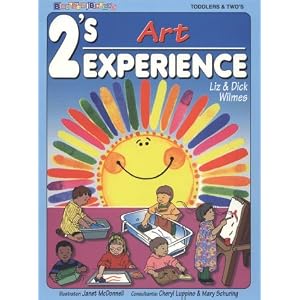
 The book I rave about, 2's Experience Art, has a suggested activity to draw with soap crayons in the water table. I tried to make soap crayons by combining powdered dishwasher detergent, a small amount of water, and red food coloring, and then packing the mixture into a muffin tin to dry out. They dried out, all right.

They crumble at first touch and don't leave a mark. Not the greatest crayons ever. On a positive note, our water table became beautifully, shinily clean after I tried applying the "crayons" to its surface and then rinsed and scrubbed with a sponge.

I ask you, readers, what do you use for soap crayons?

Monday, July 25, 2011

Storybook Week 11: Pete's A Pizza

This week's storybook classic is Pete's A Pizza, written and illustrated by William Steig. In this book, Pete is in a bad mood. Luckily, his dad is there to help.

Image courtesy of clker.com


1. Read the Story
Language Arts
 
Read the book Pete's A Pizza, or watch the storybook video, or both.

2. Cooking Your Child
Story Interest/Dramatizing/Gross Motor Skills

Did that heading catch your attention? The second activity related to Pete's A Pizza is to make a pizza out of your child, of course. Follow along with the book or make up your own process.

In the book, Pete's dad makes him into a pizza by kneading the dough (rolling Pete), spreading it (stretching Pete's arms), whirling and twirling (throwing Pete up in the air), applying oil (water), adding flour (you just want to pretend here - baby powder can be very dangerous for young children to inhale), and topping with tomatoes (checkers, for example).

This is a great activity for children who naturally need more large body movements. It might calm down some children who need lots of physical action. Research shows that it is good for children to have "wrestling" or other physical goof-off time with their parents, especially their fathers.

Babies gain so much - even in brain development - from touch, so this particular activity would be good for babies, too.

3. Drawing Moods
Arts and Crafts/Fine Motor Skills/Music


You and your child each get a piece of paper and drawing utensils. Both of you draw a picture of a sad child. Then a grumpy child. Then a giggling child. If you like, you can play different pieces of music that have different moods (lively classical, soothing lullaby, rock 'n roll, etc.) Try to draw the music or the mood that you hear or feel.

4. and 5. Cooking Your Pizza
Cooking/Fine Motor Skills/Pretend Play

You and your child might catch yourselves feeling hungry for pizza tonight after all this pizza-type activity.

First, set up a grocery store with any play kitchen materials you have. If you don't have kitchen and food toys, see how many empty boxes and containers you can raid from your real kitchen to set up the pretend grocery store. A plastic grocery cart makes this enjoyable, but any bag or basket will do.

Set your child on a hunt for ingredients you will need to make pizza. You can get into the grocery shopping trip as much as you want to, incorporating cash register and money and making change, or just let your child play a bit before making the real dinner.

Second, make the real pizza with real ingredients. Here is a super easy and delicious recipe I often use:

Ingredients:

whole wheat pita bread (2 packs)
pesto sauce
tomato paste (1 or 2 small cans)
sliced vegetables, any you like
shredded cheese, whatever type you like or have on hand

Instructions:

Spread pesto sauce on each pita circle, then tomato paste. Add sliced onions, peppers, black olives, meat, mushrooms, or whatever you like on your pizzas. Top with shredded cheese (cheddar is delicious; mozzarella gives it a lighter taste). Bake in a 375 degree oven for about 10 minutes. Take out when the cheese is melted. Allow them to cool and eat them as is or cut into wedges or strips for children.

Since this recipe is all about spreading and topping, children can help quite a bit.

Friday, July 22, 2011

Simple Water Table Coloring


A simple spring or summer activity: Transform the water/sand table into an art canvas. This is another activity adapted from the book 2's Experience Art by Liz and Dick Wilmes. A roll of paper is placed over the table and taped to the sides. I simply put the paintbrush markers in one of the smaller water compartments of the table, right underneath the paper but visible and reachable. The purpose of this activity is to liven up coloring time for little ones and show them the fun of experimenting with art venues and materials. In the book, this is meant to be a crayon coloring activity, but in our area I don't think crayons would last more than five or ten minutes outside before melting down.


The book looks very unsophisticated and, in fact, it is. It does not give academic explanations for the different activities. Many of the activities are simple. However, I love this book. It is perfect for two-year-olds, just at their level, yet keeping them learning.

I really like the beginning pages that show some different ideas for displaying children's art. With inspiration from this book, my husband hung a stuffed animal hammock in the upper corner of our toddler's room to which we safety-pin his art projects. I believe displaying children's works has a great impact on them and gives them motivation to keep learning and mastering activities.
Photobucket

Wednesday, July 20, 2011

Two Ways to Help Children Learn Faster


Some people may be a bit disgusted with Way #1 to help children learn faster. It has taken many experiential lessons for me to accept Way #1, but I have finally realized its worth.

Way #1 to Help Children Learn Faster:

Give them more time.

Most skills that we want our children to learn will be learned in time. Extra struggles come when we try to make them learn things sooner than they are ready to learn them.

Parents are not helped by state and school standards here, or guidelines and rules of thumb from experts and non-expert advice givers. When we see an age next to a skill, we want our child to have learned the skill AT LEAST six months earlier than that age. Right? Am I the only one?

Those standards and guidelines are made for a reason, and they are helpful in certain circumstances. For most children, they should be used only as a guide and not as an age past which your child will never acquire the skill and the world will come to an end.

I recently read a very interesting book called The Way of Boys: Raising Healthy Boys in a Challenging and Complex World. The author, Anthony Rao, Ph.D., seems to recommend two basic strategies to help boys acquire social skills: One is to simply wait for them to grow up a little! Most boys will mature in a healthy way and acquire the skills they need. The problem arises when they don't do it fast enough for their parents or teachers or school administrations.

His second strategy is to use consistent behavioral programs (such as clear rule-setting, slow progression from simple to more complicated behaviors, and rewards like sticker charts).

I'm sure many of us can share stories of working day after day, painstakingly, with a child to gain a particular skill and getting nowhere with it. Then some time later, the same child can "suddenly" do it with almost no effort at all. Laying groundwork by working on particular skills is well and good, and very helpful, as long as it done as slowly as necessary and without high emotional stakes placed on learning something right away.

Way #2: Embrace Your Child's Interests

Here is an illustration: I wanted to teach my older son chivalrous manners, though I wasn't sure how to go about it. It finally hit me that he would be amenable to talking about chivalry and manners through King Arthur's knights of the Round Table. He has an obsession with knights, castles, kings, battles, and good and evil. I began to talk about chivalry and what it meant to King Arthur. 

He said, "Watch this, Mom!" and went down into a low bended-knee bow. It was a perfect example of a knight's bow, complete with hands gripping the hilt of an imaginary sword.

Due to his passion for all things knights-related, he had already absorbed at least that much of a medieval sense of chivalry and honor. This was an easy topic to discuss.
 
Sometimes a favorite stuffed animal role-playing what we want to teach is more effective than words coming out of Mommy's mouth. Sometimes Daddy or an aunt or uncle is a better teacher because our child is able to listen more intently to them at that time.

People have always known it is easier to encourage children to do things if they are related to the children's interests. Diego toddler utensils, Dora toothbrushes, dinosaur stickers on a potty training chart...  We probably all use this method quite often. 

There are some things that family members here are slowly learning to do. I coach myself to take a deep breath and remember that, contrary to what my brain is telling me, there is not a specific date on the calendar that these things have to be perfectly learned. It also helps to look around for examples of things that I myself have taken long taken a long time to learn. And I successfully made it through all my (academic) schooling!

Saturday, July 2, 2011

I Stink! Storybook Activity, Documented

We are doing the Read. Explore. Learn Summer Reading Challenge today. (See the badge to the right.) I'm so excited about it!
 

In Your Community
Social Studies/Story Interest/Arts and Crafts


This is part of Afterschool Homeschool's Storybook Week on I Stink! by Kate McMullan. (See my disclosure about affiliate links below.)


"Talk about your community: Do you see police officers in your community? Fire trucks? Where are the library, city hall, fire station, grocery stores, haircutting shops, and post office? Do you see garbage collectors in your neighborhood? What do they do? Where does your trash go?

Set up a play community using building blocks. Or, if you have them, use play sets. Here is one that we used for a while. And here is a great idea for building a Safety Town out of cardboard boxes, paper, glue, and markers or crayons. (The craft idea is at the end of part two of this great safety tips video. It is not step-by-step instructions, just a demonstration of what the children made. They use cardboard boxes of different sizes, glue white paper onto the surfaces, and allow the children to decorate them into whatever "safer buildings" they like.)"

We used our wooden blocks to make a town. It had a fire station, police presence, roads, and a garbage truck that was going around picking up "trash cans" (tiny Lego barrels work well if you can use them around your children without them being lost or swallowed).


The children liked this activity. What they really liked was reducing the town to this:

Then it could evolve into a castle (with their dad's help):

Which could then be joyfully reduced to this:


Afterschool Homeschool is now a participant in the Amazon Services LLC Associates Program, an affiliate advertising program designed to provide a means for sites to earn advertising fees by advertising and linking to amazon.com. Where I have noted that I do not receive compensation for reviewing or linking to an item, that is true and means that the relevant link is not an affiliate link. Thank you for visiting Afterschool Homeschool!

Wednesday, June 29, 2011

The Easiest (and Most Polite) Children's Thank You Notes

Margaret Shepherd, in her book The Art of the Handwritten Note, has this to say about thank you notes: "Party or no party, birthday gifts require a thank-you note written by you in your own handwriting. 'Fred says thank-you for the Ferrari,' is acceptable only if the car is two inches long and Fred is still in diapers."

What about children who cannot yet write in their own handwriting? Artwork is often welcomed by the gift-giver, as are photos, especially of the child using the gift.

I have to thank my mother for the following easy children's thank-you note idea.

Cut a length of paper (butcher paper, for example) to fit a low craft table. Tape the edges of the paper to the table so that it won't move around when it is colored. Supply whatever craft materials you would like your child to use. Ready, set, go! Let your child color and decorate to his or her heart's content.


When your child has finished, cut the long paper into notecard sizes. You might also write "Thank You" along the side of each card, or your child's name and the date.

You should now have between 20 and 40 customized notecards to use the next time your child receives a gift.

Thank you, Mom!

Tuesday, June 14, 2011

Investments of Books and Time

Powerlaunch has posted another tremendous reminder to help us raise our children to be leaders: Spend or Invest Your Child's Summer? I love the list of educational investments we can make for our children or help our children to make for themselves this summer. I will be going back again and again to this post because several of the ideas were refreshing and new to me.

Along a similar line, today I read Shiloah Baker's post How the Environment in the Home Affects Children. After reading both posts, I am inspired to highlight the classic books we already have in our home and to acquire more fun classics, a few books at a time.

There are easy ways to highlight certain great books. One is to move an extra bookcase into the common area of your home and to fill it with the books you want to highlight.

Another way is to pick a time of day to read aloud those particular books. Even if you already read books to your children around naptimes and bedtimes, those stories tend to be the same beloved books over and over again (at least at our house).

Breakfast is a great time for reading aloud, as is lunchtime if you are at home and your children are preschool-aged, home for the summer, home for school holidays, or home as usual for homeschooling. Many parents choose to read aloud over the dinner table, perhaps for some relaxed time after the family has finished eating. Jim Trelease in his Read-Aloud Handbook recommends reading to older children as they do the dinner dishes.

Monday, June 13, 2011

Storybook Week 8: How Do Dinosaurs Say Goodnight?

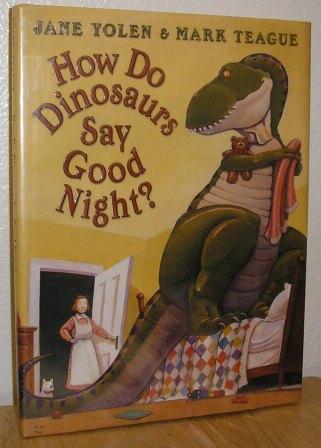
How Do Dinosaurs Say Goodnight?, one of a series of marvelous, fantastic, wonderful books starring dinosaurs, was written by Jane Yolen and illustrated by Mark Teague.

customer image from Amazon.com


1. Read Aloud
Language Arts

Read the story to your child and/or watch the storybook video.

2. Tuck in Dinosaurs
Story Interest/Pretend Play

Make a cozy box, container, or doll bed into a bed for some toy dinosaurs. Use dinosaurs you already have at home or print and cut out pictures of dinosaurs. Don't forget pillows, blankets, and teddy bears! Let your child soothe dinosaurs who are stomping, roaring, or crying. Show your child how to read a story and give hugs and kisses and tell the dinosaurs good night.

3. Dinosaur Roar!
Outdoor Activity/Dramatizing

This is a good opportunity to teach outdoor voice versus indoor voice. Tell your child dinosaurs are allowed to whisper inside the house. Practice whispering. Then say that they are allowed to roar when they are outside!

Go outside and practice roaring at the top of your lungs. Try a Velociraptor roar, then a Tyrannosaurus roar, then a Brachiosaurus roar. Do they sound different?

4. No Jumping on the Bed
Gross Motor Activity/Dramatizing

Lay a rug or mat out on the floor. Put pillows at the head. Pretend to be naughty dinosaurs jumping on the bed. Jump up and down on the mat. (If you are putting the rug or mat on a smooth floor, be sure it won't slide and cause accidents.)

When you are done being naughty dinosaurs, lay down and pretend to sleep. Older children might like to snore or learn to pretend-snore.

5. Teddy Bear Toss
Gross Motor Activity

Take a laundry or other type of basket and place it somewhere in front of a couch that your children can sit on. This game is fun with more than one person, if possible. Place a pile of teddy bears (and other stuffed animals, if you like) next to your children. Have them take turns tossing a bear into the basket. Encourage them to get the bears as close to the basket as possible, if not inside it.

Caution: If you are in the middle of teaching a baby or young toddler not to throw things in the house, you may want to adapt this activity. Place the pile of bears on the floor next to the basket and announce that it's clean-up time! The bears all want to go inside! Then take turns placing bears nicely into the basket. When you're finished, the basket can be dumped out and you can start again.

This activity is great for babies who can sit up and throw (or drop) things. It is also great for toddlers, preschoolers, and young siblings playing together.

Additional Ideas:

I just found this post on a Dinosaur Theme Week at one of my favorite blogs, Children's Learning Activities. Dig in to these ideas!

Also see my post highlighting the Dinosaur Popsicle-Stick Puzzle activity from Crafts~N~Things for Children for a great activity that is easy to do.

Thursday, June 9, 2011

Booking Through Thursday: Own or Borrow?

Booking Through Thursday hosts a weekly meme with a bookish question each Thursday.

This week's question is: "All things being equal (money, space, etc), would you rather own copies of the books you read? Or borrow them?"

Both! I do not need a copy of every book I read and probably would not return to most of them if I did own a copy. Yet I am one of those people who re-reads beloved books dozens of times.

I recently confessed to my husband that if anything happened to my copies of The Lord of the Rings trilogy (and The Hobbit) and The Chronicles of Narnia, I would feel lost and partly empty until I replaced them.

Since this blog is about children and learning activities, I'll address the question from the standpoint of children's books. For the most part, I would prefer to own many children's books. That way, the children can see them in the bookcase and pull out whatever book they would like to explore. On the other hand, we have access to thousands of books and dozens of magazines at the public library. I would never buy all of those books or magazines, no matter how much money I had. Taking advantage of our public library means a nearly infinite stash of reading materials to choose from!

Friday, May 27, 2011

Winter Fun in the Summertime

Some of us live in climates where the heat of summer is more punishing than the cold of winter.

During the winter season, there are posts everywhere to help families have fun when it's just too cold to take the children outside.

Let's twist that and talk about finding fun when it's just too hot to take the children outside. 


In the summer, those who live in hot climates will still have their share of picnics and water play...heavily shaded with sunblock or clothing, of course. (Especially if your family has fair skin and a history of melanoma like ours does.)

But what to do when no one wants to go outside or when the temperature is actually dangerously hot?

My Number One Summer Tip for Parents In Hot Climates:

Take another look at those winter activity posts and do them now!

Image courtesy of clker.com


Some involve snow play, which won't be possible, but even those can be tweaked. Get creative, and don't forget to ask your children for input.

Activities:

1. One example of a winter post I found useful in summer was Surviving Winter: Bath Play from Children's Learning Activities.

2. Another way to do water play while avoiding the glaring sun is to locate the indoor pools and water parks near your home. Does your YMCA have an indoor pool?

3. Now that it's summer, get serious about checking out those museums you've been wanting to take your children to. Don't forget to look up "free museum days" for the museums near you.

4. You know those vintage-y pictures of people by the fireside drinking hot cocoa and playing games? Make homemade slushies (from The Motherload) or old-fashioned lemonade instead to drink while you play Uno, Settlers of Catan, or Candy Land.


5. Movie Marathon! You could go two ways with this: Either watch everyone in the family's favorite summer movie or make a list of favorite winter movies and watch those.

6. Go to the library. The local library might be our country's most underused resource for the number and value of programs it usually offers. Pick up a copy of the summer calendar.

7. Get a head start on Christmas by holding a Christmas Planning Day. This could be combined with #5 for great ambience if you choose to watch favorite winter movies. Everyone can make a list of things they'd like to make or buy for other people. After the lists are completed, plan to go garage-sale-ing to look for bargains or start your homemade projects.

And of course, get outside when it's not dangerous and not quite as punishing!

I will elaborate on each of the examples above as summer gets underway, so look for those Winter Fun in the Summertime posts.

Tuesday, May 24, 2011

One Hungry Mama Blog

I know this blog is not about food or cooking, but you really must look at this quality blog by a Brooklyn mom who used to, among other things, create educational TV for Sesame Street Workshop. Her site, One Hungry Mama, is full of recipes I would be proud to serve my family and there are some helpful back-to-school lunch posts there, too!

Her tagline is: "Kids change the way we cook, but they don't have to change how well we eat."
 
I found out about the website through my lovely sister-in-law who is helping to design the charity cookbook for Japan that you will see highlighted on the site.

To keep it about learning activities, check out this post where One Hungry Mama shares a "recipe" for a truly edible finger paint.

Storybook Week 7: Harold and the Purple Crayon

This week the storybook is Harold and the Purple Crayon, written and illustrated by Crockett Johnson.


1. Read the Book
Language Arts/Story Interest


Together with your child, read the book or watch the storybook video.


2. Make a Safety Town
Arts and Crafts/Safety/Dramatizing/Pretend Play

In Harold and the Purple Crayon, Harold decides he needs a moon, so he draws one. He needs a path, so he draws one to walk down. Through his adventure, he keeps hold on his purple crayon so that he can create what he needs, whether it be a shortcut across a field or a whole city. This is a powerful concept for children. The idea that they can create the world they want to play in through their imaginations is a breathtaking one.

I like this Safer Strangers, Safer Buildings video from Child's Eye Media to combine safety information for young children with a way to play pretend with these new ideas. Look at the end of Part 2 to see the safe buildings the children make to create a safe town. It looks like they are making the buildings out of small cardboard boxes about the size of instant oatmeal boxes. The boxes are covered with white paper so that the children can draw any embellishments or signs they like on their buildings. Adding people and vehicles to the town would of course make it even more fun.

3. Purple Paper Night Sky
Arts and Crafts

Your child may want to draw with a purple crayon after reading this book. That would be fantastic; let your child do what he or she likes with a purple crayon and paper. Be prepared for a nice story about what is being drawn.


A different activity for children who are not interested in a purple crayon is to use purple construction paper and white chalk to make a night sky. The texture of chalk on construction paper can be a learning experience in itself.

For a baby or toddler: Allow your baby or toddler to use chalk on construction paper if baby is old enough to safely hold and use chalk. Your toddler may be quite fascinated with making white marks on a colored paper instead of the other way around.

For a preschooler: Ask your child to draw stars and a moon on your purple paper to make a night sky. You might even add to the picture yourself.


For an older child:
Combine learning about constellations with drawing some on the paper. If you have not already learned together about constellations, look up some pictures of constellations in the sky. For this arts and crafts activity, have your child make up his or her own constellations and name them.


4. Sailboats
Story Interest/Science

Harold draws a sailboat and sails across water. How does a sailboat work? What makes it go?

Explain that a sailboat needs its sails to be up so that wind can blow the sails and push the boat.

For a toddler or preschooler: Find two plastic bath toy boats, one with a sail and one without. Draw a bath, put your child in, and do an experiment. First put in the boat without a sail. Blow on it. Allow your child to blow on it too. The breath might move it a little bit but likely won't push it forward very far. Now take that boat out and put in the boat with the sail. Blow on the sails. This boat should move forward much more easily because there is wind in its sails.

For an older child: Have your child build a sailboat. Here is a link to a 5th Grade Sail Boat Project.


5. Finding Your Room
Geography/Story Interest/Physical Activity

Start in your child's bedroom. Now lead him or her out to another room. Instruct your child to go back to the bedroom. Ask how they found it. Go to another room. Tell your child to get back to the bedroom as quickly as possible. Try this from one other room.

For a toddler: Do the above activity, emphasizing which room is your toddler's room. Have fun with it! If your toddler needs an extra challenge, try it with all the lights out and a flashlight.

For a preschooler: Do the above activity, asking your child which direction they are going as they navigate to their room. Do the flashlight variation because a preschooler will be delighted with it!

For an older child: Have your child first walk back to the room, then sit down somewhere and draw a map to show the way they walked. This map can be as simple or as elaborate as necessary. Some preschoolers can do this activity.


Note: Anytime you or your child gets excessively frustrated with an activity, take a deep breath and remember the purpose of the activity. Some of your purposes may be: To teach, to learn, to have fun, to spend quality time together, and to evaluate your child's abilities. It is usually better to avoid an outburst of frustration with each other than to complete an activity. Sometimes just taking that breath, looking each other in the eyes, and thinking for a moment about the real issue bothering one (or more) of you is extremely valuable.

Monday, May 23, 2011

Bedtime Routines


PowerLaunch recently posted about The Power of Routines, including a poignant passage about the power of a bedtime routine.

Our youngest is a great sleeper. People always comment on how he goes straight to sleep when we put him down. This usually happens even when we are in a new environment like visiting in someone else's home. What he has is a bedtime routine that has been the same from about two months old until the present time, twenty-three months old. That is twenty-one months of the same routine for each nap and each bedtime. If I did my math correctly, that is over 1,600 occurrences of the same ritual.

We do a bath every other day, followed by diaper and pajamas, followed by tooth brushing and flossing, followed by zero to three bedtime books (depending on the day). Then he has the same lullaby sung to him and he is laid down on his bed with the same litany describing his bedtime objects. His music box is then turned on and I say the very same good night message to him.

Any bedtime routine that includes healthy wind-down activities and an expression of love is a fantastic bedtime routine.

What is your child's or children's bedtime routine?

Tuesday, May 17, 2011

Three Ways to Teach Children a Work Ethic

A work ethic is something most parents want their children to learn. Here are three ways to begin to instill one in your child.

1. Start Early with Cleaning Up.

Every time your baby plays with toys, have a clean-up time when it's time to move on to something else. You might use a clean-up song to sing each time. Definitely use the term "cleaning up," even to your tiny baby.

You will start by cleaning up all the toys yourself. Do it cheerfully to show that it is a good and fun thing. As baby gets older, he or she can have a turn dropping a toy into a basket. You and your baby or toddler can take turns dropping one toy into the right place. Saying, "My turn! Your turn! My turn!" etc. also sets up the concept of sharing and taking turns for later lessons.

Each time playtime is over, have your child pick up toys. You can either cheerfully help or limit the number of toys available to a number that your child can pick up on his or her own.

If you do these things every single time, your child will naturally learn to clean up, with a minimum of fuss and a maximum of cheerfulness. Okay, it may not work perfectly every time, but it does lay the right groundwork.

2. Be the Example.

Groan. Another hard thing to model for your children, right? Being the example is the best way to teach your children anything in the world. Show them what you do in your daily life. Later you can tell them why.

Do your tasks until they are finished. Let your children see you working. Try to maintain a cheerful (or at least neutral) demeanor while working. Note: For me, these are things I have to work on continually. Keep in mind that, just as you are not perfect, neither will your children be. (Thank you, Chronicles of a Babywise Mom, for that good lesson.)

3. Trade help.

By the time your child is a preschooler, he or she can help you out in many ways. Babies can help pick up in the manner described above, and toddlers can help, too. Some toddlers can fold washcloths, some can sort laundry, some love to unload the dishwasher with you, and some can set dinner utensils on the table.

Next time your child asks for your help, help him or her. Ask him or her to agree to help you next time you need help. All of this should be done and said in as chipper a tone as possible. Get your child's agreement.

The next time you do a task that your child could possibly help with, ask him or her to help you. Give a reminder of how you helped them and asked for their help in the future. Use their help!

Depending on the age of the child, you might not want to require more than five minutes of help. You want this to end on a positive note, with all people feeling proud of themselves. On the other hand, if you have hard workers who can do more than five minutes, have them do as much as they can so that they have something legitimate to be proud of.
Related Posts Plugin for WordPress, Blogger...