Showing posts with label money. Show all posts

Monday, July 4, 2011

Displaying Independence with Allowance


My husband and I like the new allowance and chore system we set up for our five-year-old. The basic premise behind it is "practice makes perfect." Mistakes and regrets will happen; that will be part of the learning process. As the folks of Love and Logic say, it's better to make mistakes now (and learn from them) while the stakes are very small.

(Please see the disclosure notice at the bottom of the post about Amazon links.)

I love this book I recently borrowed from the library:


 Money Doesn't Grow On Trees: A Parent's Guide to Raising Financially Responsible Children. We used a lot of her concepts while setting up this new allowance system.

Chores and Money

At first I thought I would never want to tie in chores to allowance. Now I think that tying in some of them to allowance or extra pocket money is a great idea. It is very motivating for our five-year-old. He cheerfully helps around the house (for free) when I ask him to, so he already has a good spirit about helping and doing housework. The money motivator helps when there is a day he is tired of helping out or when I would like him to get the task done faster, or when the task is above and beyond what we expect of him.

We assign our son certain chores that must be done every week before he can earn his allowance. He must make his bed and pick up his room every day. Out of a list of suggestions, he chose cutting coupons for an additional chore to earn his allowance. He and I now spend fifteen minutes or so together cutting coupons out of the Sunday paper. It helps me; it's a fun together-time; it strengthens his already-good cutting skills; and he gets his allowance right afterward. Win-win-win-win!

The thing I like best about this system is how it gives him all the responsibility for completing his required tasks. He doesn't do them? No allowance. I don't have to nag if I don't want to. In fact, here is his latest independence display: when I ask if he has made his bed yet, he tells me he does not want me to say that. He wants to remember and do it on his own. My child has requested that I NOT remind him. I love it.

Allowance: What Goes Where?


He is now saving up for something specific in his piggy bank. He has a piggy bank for short-term savings, a sharing jar for giving to others in need, and a wallet for spending money.

We give five dollars' allowance every week. This means that we do not buy him treats or dollar items at the stores anymore: He can choose to pay for those things out of his spending money if he likes. In the fall, when he starts school, he may choose to buy school lunch or milk with his spending money (otherwise, we are packing lunches every day!)

Two dollars goes into the piggy bank (he is saving for a small Lego set), two dollars goes into the wallet, and one dollar goes into the sharing jar. Large gifts of money (twenty dollars or more) go straight into the savings account we set up when he was a baby.

Spending Money

The amount of money in his wallet is what he has to spend. I haven't vetoed him yet and don't plan to unless I see something very wrong or dangerous in what he is buying. As I said above, mistakes will happen.

These are the things he has bought so far with spending money that I would never have bought for him:

  • Two more bags of army soldiers/police officers
  • Yet another foam sword
  • A light-up rubber caterpillar/worm/thingy (you probably know what I'm talking about)
The light-up worm-thingy is broken after one day of play; he says he needs to go buy another one. Oh, boy.

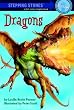
I should mention that his very first purchase ever was a beginning chapter book called Dragons from a Friends of the Library bookstore. It cost him $1.00, and he got every penny's worth out of that book.

Visit The Activity Mom, June Cleaver Nirvana, Milk and Cuddles, Quirky Momma, and JDaniel4's Mom for more Displaying Independence posts...or to link up!

Afterschool Homeschool is now a participant in the Amazon Services LLC Associates Program, an affiliate advertising program designed to provide a means for sites to earn advertising fees by advertising and linking to amazon.com. Where I have noted that I do not receive compensation for reviewing or linking to an item, that is true and means that the relevant link is not an affiliate link. Thank you for visiting Afterschool Homeschool!

Monday, May 16, 2011

Monopoly Junior Lessons


Recently, my five-year-old was given Monopoly Junior. The age range on the box is 5-8 years old. He has just turned five, so I was interested to see how he did with this game. While he and his father and I played the game, I noted the lessons for my son.

1. Addition and Subtraction

Using money and paying in different denominations gave him practice adding and subtracting to make the right dollar amount. He could use more practice, but this is a fun way to get practice in. The denominations are 1, 2, 3, 4, and 5 dollar bills, so it is an easy way to start.

2. Game Playing Basics

My son is used to taking turns in games. This game also gave him more practice counting game board squares to move ahead, following directions, "reading" dice, and using his own colored game pieces (marker to move around the board and ticket booths to set up on the spaces he paid for). I was actually surprised to see him happily end the game with Dad as the winner. He usually wants to be the winner at everything. (I don't think he's the only four- to five-year-old with this tendency.)

3. Reading

He can sound out words and read many words from context, but he also has some way to go before he can read many books on his own. The Chance cards and game spaces gave him lots of opportunity to read with very specific context clues. He did great!

4. Finance

Okay, not high finance, but this game gives a $2 "allowance" for passing Go, so it reinforces the idea of an allowance. It also shows the properties of ownership. Whichever person paid at a space to put up their ticket booth had the right to collect admission every time someone landed at their ticket booth. Our son got used to paying other people at their ticket booths and asking for money when people landed on his own booths. Another basic idea it reinforced was the accumulation of money. The person with the most money at the end of the game wins. This game is completely based on chance, so it's not due to skill, but nonetheless, if you have the most money, you win.

Monday, May 9, 2011

Storybook Week 5: Curious George Rides a Bike

Curious George Rides a Bike was written and illustrated by H. A. Rey and published in 1952.

1. Read the Story
Language Arts

Read the story Curious George Rides a Bike and/or watch the Storybook DVD.

2. Ride a Bike
Gross Motor Skills/Outdoor Activity

If your child has a bike, go for a bike ride together. If your child is too young for a bike but has another riding toy, use that instead. If your child does not have any riding toy, show him or her how to bicycle your legs in the air while lying on your back. Do pretend pop-a-wheelies this way. See who can "jump the bike" the highest.

3. Get Your Headlines Here
Story Interest/Money

Do you get a newspaper delivered to your house? Start a conversation with your child about how that newspaper gets to your house. Or if you get a magazine subscription, talk about how that magazine gets to your house. If you don't get newspapers or magazines, go to a local store to buy one. Talk about the person who sold the paper or magazine to you.

Pick one of these jobs (newspaper delivery, mail carrier, cashier) and research it with your child. You can simply describe the job and be on the lookout for the person who has that job in your neighborhood, or you can go as deeply into the research as you like. This is a link to the Bureau of Labor Statistics page about United States Postal Service mail carriers.

This may be a good time for a money lesson. Let your child know what your family pays for (home, groceries, clothes, electricity, TV service, etc.). If possible, let your child see the bills and see you paying them. Explain where your family's money comes from. Introduce the concept of having a job and being paid for it. If your child is old enough to ask for or desire money to buy something he or she wants, consider paying a wage for a job that is more than what they are normally expected to do around the house.

4. Make a Boat
Story Interest/Arts and Crafts/Science

Mathematische Basteleien has clear instructions for folding a boat out of paper.

For a baby: Draw a bath or a bowl full of water and float toy boats in it. Let baby play if possible (supervised extremely closely, of course).

For a toddler: Let your toddler watch you fold a boat for as long as it holds the toddler's interest. You may need to fold it later if interest wanes. When the boat is completed, draw a bath for the toddler and both of you can watch while the boat floats. Very soon, it will sink (due to getting wet) and need to be rescued. Have plastic bath boats on hand to replace it.

You may want to do the baby activity instead if that is a better fit for your toddler. Or do both!

For a preschooler: Both of you work on folding a paper boat at the same time. Don't forget to see if they float when you're finished.

For an older child: Show the instructions and demonstrate once by folding a paper boat. Then let your child try as many times as he or she wishes.

5. Make a Circus
Story Interest/Dramatizing

Depending on the age and interests of your child, do this activity either with small figures and doll-type decorations or in real-life size with stuffed animals, larger props, and yourselves as actors.

Small or large items (depending on your scale) that would make a fun circus:

Animals
Tents (toy tents, draped blankets, real tents, or dolls' or figures' umbrellas)
Musical instruments
Music playing in the background
Circus ringmaster and microphone (Here are some ideas for making a ringmaster costume, by Andrea Hermitt.)
Rope, yarn, or string (laid on the ground for a pretend tightrope)
Dancer or acrobat costume (think tights, leotards, and makeup)
Yoga mat for doing somersaults and other acrobatics
Mini trampoline
For dolls or figures, a colorful circular blanket or mat on which to arrange the circus
Clown costume or clown dolls
Popcorn, cotton candy, peanuts (for children who are old enough to safely eat these treats)
Bicycles, chariots, carts
Capes, crowns, scepters, wands
Magic implements, top hat

Now have fun!
Related Posts Plugin for WordPress, Blogger...