Showing posts with label teenagers. Show all posts

Wednesday, August 24, 2011

How I Learned a Foreign Language

Along with my recent posts about teaching a foreign language, I thought I would post how I learned Spanish. I am proficient in Spanish, but more so in reading and writing the language than in speaking it. Fast conversation with native speakers is my weak point, although I have been to Spanish-speaking countries and, to some extent, navigated us through the trips speaking Spanish.

(Note: Spanish speakers are often very considerate of foreign speakers without us necessarily even knowing it. Especially, my sister and I noticed, in Ecuador, people speak clear and slow Spanish to foreigners.)

Elementary School

My first exposure to Spanish was a weekly elective in first grade. After first grade, my family moved to another state and I don't think I was taught much Spanish until I chose it as an elective in high school. I remember learning colors and numbers and the letters of the Spanish alphabet.

However, I had a high confidence level that I knew some Spanish and could learn more due to that early first experience. See my discussion of that point in my first post about teaching foreign languages to children. 

High School

I chose Spanish as an elective for at least two years. I'm afraid I can't remember if I took more than two years of elective Spanish. Two years was basically a requirement for getting into a liberal arts college or university. On top of using it as a requirement, I was also excited to learn more of the language that I had started learning as a young child.

College

I knew I wanted to take more Spanish in college. After earning lots of credits and slowly becoming able to use the language in more sophisticated ways, I decided to turn it into an official concentration along with my major in Psychology. I was able to write short stories, essays, and academic papers in Spanish through the Spanish Composition courses I took, and able to converse a little bit and improve my pronunciation and vocabulary through Spanish Speaking courses.

This education made me competent to travel in Spanish-speaking countries, especially because I could ask for things and answer some questions without knowing a whole lot of idiomatic language and without being all that fast. My greatest test came when I had to try to speak to the police about a stolen purse! I can't say I was completely successful in that specialized situation, but they were able to use a little bit of English with us as well.

This brings me to where I am now. I am able to read and write Spanish better than speak it conversationally. If I pass people having a normal-paced conversation in Spanish, I only catch about half of it. I would have to brush up in order to speak it in a conversation.

Because of my academic and traveling background, my weaknesses could be dealt with pretty easily through traveling to a Spanish-speaking country again for a period of time or challenging myself to speak only Spanish in conversation with Spanish speakers on a regular basis.

What were your experiences with learning a foreign language?


Sunday, August 14, 2011

Learning Foreign Languages

Teaching a foreign language (or languages) to young children is different from teaching older children and adults. According to the American Educational Research Association article "Foreign Language Instruction: Implementing the Best Teaching Methods" (see citation below*), young children learn foreign languages best by almost total immersion. Older children and adults learn fastest and best by learning the grammar rules and vocabulary of the language.

Surprisingly, according to this article, teenagers and adults can learn a foreign language faster (in terms of total hours of instruction) than younger children. A major difference in learning for younger children is that when they are surrounded by a foreign language, they pick it up with ease and may acquire better pronunciation than older learners.

There are a few common ways that children are taught foreign language in the United States.

Dual Language Programs

Dual language programs are often close to total immersion. Children are taught all, or almost all, subjects in the foreign language. There is almost no English spoken at all.

A program in a Jacksonville, Florida, elementary school has children spending one half of the school day in one classroom using only the foreign language and the other half of the day in a classroom using English. Academic subjects are rotated so the same lessons are taught in both languages, but on different days. Half of the students are native speakers of the foreign language, so their immersion experience is in the English classroom. No matter which classroom they are in, half of the class are native speakers and half are learning the language.

These programs work best if the children enter them before second grade, and often they are not allowed to enter such a program if they miss entrance in kindergarten.

Even children in immersion programs will need more instruction at an older age in grammar, vocabulary, conversation, and pronunciation.

Native speakers of a language other than English always experience immersion in a foreign language if they attend school in the United States, of course. At school and in other interactions, they must use English, where at home they often use their native language - although their parents may make a rule that they also use English at home.

Electives

Many schools or parents teaching at home use the elective approach to teaching a foreign language. This method means that the language is taught, mainly through vocabulary at the younger ages, on an occasional basis or for only up to a few hours per week.

With this method, children learn how to give greetings and talk about the weather, clothing, colors, numbers, and perhaps even common phrases that can be used in places like restaurants or libraries.

I don't believe that this amount of learning is very important to learning how to actually speak another language. I do believe, however (and the article backs me up), that it teaches children confidence in learning other languages. It is also - usually - a fun way to learn another language, so it can add to their motivation when these children want to learn more at an older age.

These children will have to learn more about grammar, pronunciation, conversation, and vocabulary if they want to actually speak the language.

Games and Media

There are now video, computer, and online games and videos that purport to teach children a foreign language. There are also VERY popular children's TV shows that teach vocabulary and phrasing throughout each episode.

In my opinion, these tools for language learning do the same thing as the elective method. They add to motivation by making the learning fun and desirable. They give exposure to the language so that children might feel confident about their ability to learn a foreign language in the future.

I have not seen research that shows children truly learning to speak a foreign language through media alone. Please feel free to share in the comments if you know of other research.

Older Children and Adults

The American Educational Research Association article includes a graph showing the number of hours of instruction English-speaking adults will need to learn a foreign language. The numbers are: 600 hours for a language similar to English (they mention Dutch, French, and Spanish), 1,300 hours for a language "different from English (e.g., Farsi, Russian, and Urdu)," and 2,200 hours for a language "far from English" like Arabic, Chinese, and Japanese.

College Instruction

One of the most interesting statistics in the article is the fact that a normal year-long college course in a foreign language is only 180 hours of instruction a year at the most.

That's three years to learn an "easy" language and twelve years for an extremely difficult one!

Based on these numbers, I would suggest that college students who want to learn a foreign language should minor in the language if it is a more similar-to-English language and major in it if it is dissimilar.

Learning Outside of College

What should you do if you are a teenager or adult who did not take or is not taking foreign language instruction in college? First, find the motivation that will allow you to commit yourself to 600 hours of instruction in a language that is close to English or 1,300 hours in a language that is different from English. If you are a native English speaker who wants to learn a language that is extremely different, such as Arabic, Chinese, or Japanese, commit yourself to 2,200 hours of instruction and study. Then, visit a place where that language is spoken to solidify your learning and reward your study.

Advantages to Any Exposure to Foreign Language

I want to make it clear that I don't think any of these methods of foreign language instruction is a bad method. They have different advantages. Any exposure to a foreign language or culture is helpful in broadening a child's (or adult's) perspective. That kind of learning is priceless.

And to be very practical about it, knowledge of any words at all in another language can 1) make a person good company when other speakers of that language are around, 2) enliven conversation, and 3) help a person to read books and other materials that quote or draw from other languages.


*American Educational Research Association, "Foreign Language Instruction: Implementing the Best Teaching Methods," Research Points (Spring 2006).

Monday, August 1, 2011

Hurricane Tracking with Children

Storms, maps, colored pencils, and time with Dad = Great Idea!

http://www.nhc.noaa.gov/HAW2/english/history.shtml


My husband had the idea to print out and laminate a hurricane tracking map to track hurricanes with our son this season. He found a hurricane tracking teaching strategy website here. Apparently there is a set of standards for what color to use for what type of storm.

He put the hurricane tracking map on a thumb drive and got it printed out poster-size and laminated by a printing store for $14. (It would only have been $3.50 to print out the poster, but with a laminated chart, we can use it again each year.)

We already have several colors of dry-erase markers that can be used to color-code the storms.


Using weather.com, I read off the coordinates for the tropical storms that have been seen so far this year while my husband marked them on the chart. During the process, he taught our son about latitude, longitude, hurricane trajectories, and some geography.

Next time, it will be our son's turn to help!

Wednesday, July 20, 2011

Two Ways to Help Children Learn Faster


Some people may be a bit disgusted with Way #1 to help children learn faster. It has taken many experiential lessons for me to accept Way #1, but I have finally realized its worth.

Way #1 to Help Children Learn Faster:

Give them more time.

Most skills that we want our children to learn will be learned in time. Extra struggles come when we try to make them learn things sooner than they are ready to learn them.

Parents are not helped by state and school standards here, or guidelines and rules of thumb from experts and non-expert advice givers. When we see an age next to a skill, we want our child to have learned the skill AT LEAST six months earlier than that age. Right? Am I the only one?

Those standards and guidelines are made for a reason, and they are helpful in certain circumstances. For most children, they should be used only as a guide and not as an age past which your child will never acquire the skill and the world will come to an end.

I recently read a very interesting book called The Way of Boys: Raising Healthy Boys in a Challenging and Complex World. The author, Anthony Rao, Ph.D., seems to recommend two basic strategies to help boys acquire social skills: One is to simply wait for them to grow up a little! Most boys will mature in a healthy way and acquire the skills they need. The problem arises when they don't do it fast enough for their parents or teachers or school administrations.

His second strategy is to use consistent behavioral programs (such as clear rule-setting, slow progression from simple to more complicated behaviors, and rewards like sticker charts).

I'm sure many of us can share stories of working day after day, painstakingly, with a child to gain a particular skill and getting nowhere with it. Then some time later, the same child can "suddenly" do it with almost no effort at all. Laying groundwork by working on particular skills is well and good, and very helpful, as long as it done as slowly as necessary and without high emotional stakes placed on learning something right away.

Way #2: Embrace Your Child's Interests

Here is an illustration: I wanted to teach my older son chivalrous manners, though I wasn't sure how to go about it. It finally hit me that he would be amenable to talking about chivalry and manners through King Arthur's knights of the Round Table. He has an obsession with knights, castles, kings, battles, and good and evil. I began to talk about chivalry and what it meant to King Arthur. 

He said, "Watch this, Mom!" and went down into a low bended-knee bow. It was a perfect example of a knight's bow, complete with hands gripping the hilt of an imaginary sword.

Due to his passion for all things knights-related, he had already absorbed at least that much of a medieval sense of chivalry and honor. This was an easy topic to discuss.
 
Sometimes a favorite stuffed animal role-playing what we want to teach is more effective than words coming out of Mommy's mouth. Sometimes Daddy or an aunt or uncle is a better teacher because our child is able to listen more intently to them at that time.

People have always known it is easier to encourage children to do things if they are related to the children's interests. Diego toddler utensils, Dora toothbrushes, dinosaur stickers on a potty training chart...  We probably all use this method quite often. 

There are some things that family members here are slowly learning to do. I coach myself to take a deep breath and remember that, contrary to what my brain is telling me, there is not a specific date on the calendar that these things have to be perfectly learned. It also helps to look around for examples of things that I myself have taken long taken a long time to learn. And I successfully made it through all my (academic) schooling!

Sunday, July 10, 2011

DIY Chef-In-Training Custom Cookbook


Okay, when I post Do-It-Yourself projects of my own making, you can bet that they will be super-simple and super-quick. Otherwise, I would probably fail at them.

I also dislike spending a lot of money on a craft (except knitting! I will spend more on knitting projects), so the materials must be easy and inexpensive to acquire.

This project was inspired by my creative son and took almost no extra work to put together.

Background: My five-year-old keeps coming up with ideas for creative foods to make and asking that we cook them. They are creative enough that most of the time we wouldn't be able to make them right then and there. I finally decided I wanted to encourage this creative cooking streak, so I did the following:

Image courtesy of clker.com


1.) Bought a spiral-bound index card notebook. (Like this*, although ours is 3" x 5.)

2.) Told my son the plan and got his go-ahead.

3.) Decorated/labeled the book. My son wasn't into decorating it at the time, otherwise we could have really gone to town on it.

4.) Wrote headings on separate index cards for his recent suggestions that I remembered.

5.) Planned a time to make the recipes, one by one, over time.

These are the names of a few of his recipes: Fruit Salad Pizza, Doughnuts (decorated just like Arnie - see this book*), Yogurt with Sprinkles, Chocolate Sauce Bananas.

I think this would be one of my best ideas yet, if it were my idea. Thanks, son!


Photobucket 

*Afterschool Homeschool is now a participant in the Amazon Services LLC Associates Program, an affiliate advertising program designed to provide a means for sites to earn advertising fees by advertising and linking to amazon.com. Where I have noted that I do not receive compensation for reviewing or linking to an item, that is true and means that the relevant link is not an affiliate link. 

Friday, July 8, 2011

Winter Fun In the Summertime: Movie Marathon

Image courtesy of clker.com


At the beginning of summer, I posted an idea to have winter fun in the summertime when it gets dangerously hot out there. Yesterday we put into action #5: the (Indoor) Movie Marathon.

After swim lessons in the morning and a sweltering trip to Target, I decided I wouldn't put the children out to play in this heat.

We have young children, so rather than choose a theme of favorite summer or winter movies, I allowed each one to choose a movie. I closed all the blinds, put popcorn in the microwave, and set them on the couch with the first-choice movie. Whew! An air-conditioned house feels really fabulous after a car ride.

If you start to feel guilty about plopping the youngsters in front of the TV, go all out with the theme of the movie and put fun themed props on the coffee table in front of them. My children spend just as much time playing pretend as watching the movie. Oh, and they also spend a lot of time on serious popcorn-munching.

Caution: The American Academy of Pediatrics lists popcorn as one of the foods that poses a high risk of choking among children.


Image courtesy of clker.com

It's not that my little ones aren't watching TV anyway at certain times of the day, but I always feel better when our mindless activities are scheduled in. Do you?

Monday, July 4, 2011

Displaying Independence with Allowance


My husband and I like the new allowance and chore system we set up for our five-year-old. The basic premise behind it is "practice makes perfect." Mistakes and regrets will happen; that will be part of the learning process. As the folks of Love and Logic say, it's better to make mistakes now (and learn from them) while the stakes are very small.

(Please see the disclosure notice at the bottom of the post about Amazon links.)

I love this book I recently borrowed from the library:


 Money Doesn't Grow On Trees: A Parent's Guide to Raising Financially Responsible Children. We used a lot of her concepts while setting up this new allowance system.

Chores and Money

At first I thought I would never want to tie in chores to allowance. Now I think that tying in some of them to allowance or extra pocket money is a great idea. It is very motivating for our five-year-old. He cheerfully helps around the house (for free) when I ask him to, so he already has a good spirit about helping and doing housework. The money motivator helps when there is a day he is tired of helping out or when I would like him to get the task done faster, or when the task is above and beyond what we expect of him.

We assign our son certain chores that must be done every week before he can earn his allowance. He must make his bed and pick up his room every day. Out of a list of suggestions, he chose cutting coupons for an additional chore to earn his allowance. He and I now spend fifteen minutes or so together cutting coupons out of the Sunday paper. It helps me; it's a fun together-time; it strengthens his already-good cutting skills; and he gets his allowance right afterward. Win-win-win-win!

The thing I like best about this system is how it gives him all the responsibility for completing his required tasks. He doesn't do them? No allowance. I don't have to nag if I don't want to. In fact, here is his latest independence display: when I ask if he has made his bed yet, he tells me he does not want me to say that. He wants to remember and do it on his own. My child has requested that I NOT remind him. I love it.

Allowance: What Goes Where?


He is now saving up for something specific in his piggy bank. He has a piggy bank for short-term savings, a sharing jar for giving to others in need, and a wallet for spending money.

We give five dollars' allowance every week. This means that we do not buy him treats or dollar items at the stores anymore: He can choose to pay for those things out of his spending money if he likes. In the fall, when he starts school, he may choose to buy school lunch or milk with his spending money (otherwise, we are packing lunches every day!)

Two dollars goes into the piggy bank (he is saving for a small Lego set), two dollars goes into the wallet, and one dollar goes into the sharing jar. Large gifts of money (twenty dollars or more) go straight into the savings account we set up when he was a baby.

Spending Money

The amount of money in his wallet is what he has to spend. I haven't vetoed him yet and don't plan to unless I see something very wrong or dangerous in what he is buying. As I said above, mistakes will happen.

These are the things he has bought so far with spending money that I would never have bought for him:

  • Two more bags of army soldiers/police officers
  • Yet another foam sword
  • A light-up rubber caterpillar/worm/thingy (you probably know what I'm talking about)
The light-up worm-thingy is broken after one day of play; he says he needs to go buy another one. Oh, boy.

I should mention that his very first purchase ever was a beginning chapter book called Dragons from a Friends of the Library bookstore. It cost him $1.00, and he got every penny's worth out of that book.

Visit The Activity Mom, June Cleaver Nirvana, Milk and Cuddles, Quirky Momma, and JDaniel4's Mom for more Displaying Independence posts...or to link up!

Afterschool Homeschool is now a participant in the Amazon Services LLC Associates Program, an affiliate advertising program designed to provide a means for sites to earn advertising fees by advertising and linking to amazon.com. Where I have noted that I do not receive compensation for reviewing or linking to an item, that is true and means that the relevant link is not an affiliate link. Thank you for visiting Afterschool Homeschool!

Tuesday, June 14, 2011

Investments of Books and Time

Powerlaunch has posted another tremendous reminder to help us raise our children to be leaders: Spend or Invest Your Child's Summer? I love the list of educational investments we can make for our children or help our children to make for themselves this summer. I will be going back again and again to this post because several of the ideas were refreshing and new to me.

Along a similar line, today I read Shiloah Baker's post How the Environment in the Home Affects Children. After reading both posts, I am inspired to highlight the classic books we already have in our home and to acquire more fun classics, a few books at a time.

There are easy ways to highlight certain great books. One is to move an extra bookcase into the common area of your home and to fill it with the books you want to highlight.

Another way is to pick a time of day to read aloud those particular books. Even if you already read books to your children around naptimes and bedtimes, those stories tend to be the same beloved books over and over again (at least at our house).

Breakfast is a great time for reading aloud, as is lunchtime if you are at home and your children are preschool-aged, home for the summer, home for school holidays, or home as usual for homeschooling. Many parents choose to read aloud over the dinner table, perhaps for some relaxed time after the family has finished eating. Jim Trelease in his Read-Aloud Handbook recommends reading to older children as they do the dinner dishes.

Thursday, June 9, 2011

Booking Through Thursday: Own or Borrow?

Booking Through Thursday hosts a weekly meme with a bookish question each Thursday.

This week's question is: "All things being equal (money, space, etc), would you rather own copies of the books you read? Or borrow them?"

Both! I do not need a copy of every book I read and probably would not return to most of them if I did own a copy. Yet I am one of those people who re-reads beloved books dozens of times.

I recently confessed to my husband that if anything happened to my copies of The Lord of the Rings trilogy (and The Hobbit) and The Chronicles of Narnia, I would feel lost and partly empty until I replaced them.

Since this blog is about children and learning activities, I'll address the question from the standpoint of children's books. For the most part, I would prefer to own many children's books. That way, the children can see them in the bookcase and pull out whatever book they would like to explore. On the other hand, we have access to thousands of books and dozens of magazines at the public library. I would never buy all of those books or magazines, no matter how much money I had. Taking advantage of our public library means a nearly infinite stash of reading materials to choose from!

Wednesday, June 8, 2011

Daily Focus for a Five-Year-Old


A week ago, I posted about a process I go through each morning to help organize my tasks and my brain. I mentioned that I would be trying it with my older son for a week and reporting back.

Here is the report.

I went through the process the same way with my son that I do with myself, with one exception. I only asked him for one to two tasks in each of his categories to keep it age-appropriate.

To quickly recap, the process includes three steps: 1) writing Daily Focus on a piece of paper and listing one to three things to focus on accomplishing that day, 2) writing Daily Order underneath that and listing prioritized tasks according to prioritized life roles (like student, son, brother, worker, etc.), and 3) writing Extraordinary Thing underneath that and listing one extraordinary, amazing, over-the-top, or brave thing you will do today.

These are some examples of things my son listed under Daily Focus: playing, play-fighting, eating dinner. It turned out that he prioritized his life roles this way: Number 1 was player, number 2 was worker, number 3 was brother, and number 4 was son. I usually had to prompt him about his required chores under the worker category. His other tasks were things like giving hugs, play-fighting with his brother, and being nice. When he starts school in the fall, he will have a few more important tasks to think about in terms of getting ready for the next day and possibly homework.

When I asked what he thought about this process, he said, "Nothing!" There are parts of this exercise that are not very useful for a five-year-old or younger, but I still think getting into an organizing and planning habit is worthwhile even at this age.

One of the most useful parts of the process with him was the Extraordinary Thing. He is at an age when it is important to him to be admired for his skills. One day his Extraordinary Thing was a spin-jump, and he wanted me to watch while he did about eight spin-jumps, trying to perfect them into one perfectly amazing spin-jump. It was good for him to have that outlet.

I think it is good for people of all ages to have that outlet. Even if doing an Extraordinary Thing does not earn you anyone else's admiration, it may earn you your own approval, which always feels good.

Monday, June 6, 2011

Summer Reading Programs

In our area, there are several summer reading programs for children to earn small prizes by reading books (or having books read to them). My oldest is only five years old, so he is not eligible for Pizza Hut's Book-It! program yet, but that is always a fun one, too. My younger son is only two years old, but almost all of the programs I have seen welcome children this age who are having books read to them.

The two main things to consider when enrolling are:

1.) Will this program be fun for my child? (Or, will it kick-start some reading interest in my child if my child has none right now.) My children like books, so I want to be careful not to turn reading into a big chore for them.

2.) What are the prizes? If the prize is a shirt that only comes in large sizes, there is not much reason to sign up your toddler. If it is a bookstore voucher, you could easily use the prize on any age child.

Look for reading programs at local bookstores and grocery stores as well as your library. This morning our local library kicked off a summer reading program...and Clifford the Big Red Dog and Curious George showed up! There was a coloring page to go with the theme that both boys finished:


We are now signed up for three reading programs, which is more than enough to keep track of. It can be a good idea to sign up for more than one if you and your children will finish one of them early. For example, one of our reading programs asks for ten books that your child has read over the summer. We are still reading lots of picture books along with some chapter books, so this program will be very quickly completed.

Thursday, June 2, 2011

"Yes!" Day

The idea of "Yes!" Day came from another blogger or blog commenter whom I cannot find again. I think the idea was posted on Inspired to Action or Wonder Woman Wannabe; both of those article links are fantastic reads for parents needing a bit of inspiration around having fun with their children.

Every child-parent relationship needs a "Yes!" Day at least once a year. On "Yes!" Day, the parents say "Yes!" to all of their children's requests (with some exceptions).

I command...ice cream cones!


Implementation is simple, and there are only three preparatory steps. And one of the steps is optional!

Prep. Step 1:

Brace yourself to say yes to children's requests that you would normally and automatically say no to. While you are bracing yourself, make a list of things that you will not be able to say yes to due to safety hazards or monetary constraints. Think of a fun way to say no to those things, like, "Yes when you are sixteen years old!" or "My mouth cannot say yes because I love to see you alive and unharmed!" Make it a silly "no" if you think that will be appropriate for your child. If you think your child will manipulate "Yes!" Day and spend all day asking for things to see just how much he or she can get, you may want to write and post a list of things that the child may ask for on this special day, and check them off as the child asks for them.

Prep. Step 2: 

Tell your child the day before that you are celebrating "Yes!" Day tomorrow. That means whatever the child requests to do or have, within reasonable limits, will be granted. Share with your child the list of things you cannot say yes to and explain the reason. Younger children will need more preparation with lots of examples of things you will say yes to (that you normally say no to) and lots of examples of things that you will not be able to do.

Prep. Step 3 (optional):

You may or may not want to stock some supplies for "Yes!" Day, like ice cream and cones or new bubbles or a dirt or water toy or a movie rental. Or you can just wait until the child asks for something on the day, and then go get it. The latter strategy could be helpful in limiting the number of requests if you fulfill them one at a time. On the other hand, it might use up extra gas for the car and give your child innumerable new ideas at the shops!

Hint 1: Take pictures of "Yes!" Day and then display them around the house.

Hint 2: A "Yes!" Day is beneficial in proportion to how different it is from daily life. By this I mean that most of children's days should be limited by reasonable, age-appropriate, and parent-set boundaries to keep them safe, secure, and learning about the world. A "Yes!" Day can then be a parent's way of acknowledging that pure and simple fun is a good thing, too.

Friday, May 27, 2011

Winter Fun in the Summertime

Some of us live in climates where the heat of summer is more punishing than the cold of winter.

During the winter season, there are posts everywhere to help families have fun when it's just too cold to take the children outside.

Let's twist that and talk about finding fun when it's just too hot to take the children outside. 


In the summer, those who live in hot climates will still have their share of picnics and water play...heavily shaded with sunblock or clothing, of course. (Especially if your family has fair skin and a history of melanoma like ours does.)

But what to do when no one wants to go outside or when the temperature is actually dangerously hot?

My Number One Summer Tip for Parents In Hot Climates:

Take another look at those winter activity posts and do them now!

Image courtesy of clker.com


Some involve snow play, which won't be possible, but even those can be tweaked. Get creative, and don't forget to ask your children for input.

Activities:

1. One example of a winter post I found useful in summer was Surviving Winter: Bath Play from Children's Learning Activities.

2. Another way to do water play while avoiding the glaring sun is to locate the indoor pools and water parks near your home. Does your YMCA have an indoor pool?

3. Now that it's summer, get serious about checking out those museums you've been wanting to take your children to. Don't forget to look up "free museum days" for the museums near you.

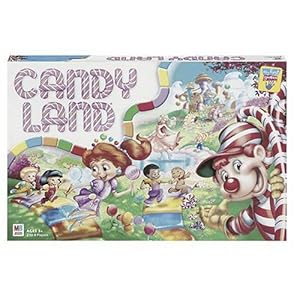
4. You know those vintage-y pictures of people by the fireside drinking hot cocoa and playing games? Make homemade slushies (from The Motherload) or old-fashioned lemonade instead to drink while you play Uno, Settlers of Catan, or Candy Land.


5. Movie Marathon! You could go two ways with this: Either watch everyone in the family's favorite summer movie or make a list of favorite winter movies and watch those.

6. Go to the library. The local library might be our country's most underused resource for the number and value of programs it usually offers. Pick up a copy of the summer calendar.

7. Get a head start on Christmas by holding a Christmas Planning Day. This could be combined with #5 for great ambience if you choose to watch favorite winter movies. Everyone can make a list of things they'd like to make or buy for other people. After the lists are completed, plan to go garage-sale-ing to look for bargains or start your homemade projects.

And of course, get outside when it's not dangerous and not quite as punishing!

I will elaborate on each of the examples above as summer gets underway, so look for those Winter Fun in the Summertime posts.

Tuesday, May 17, 2011

Three Ways to Teach Children a Work Ethic

A work ethic is something most parents want their children to learn. Here are three ways to begin to instill one in your child.

1. Start Early with Cleaning Up.

Every time your baby plays with toys, have a clean-up time when it's time to move on to something else. You might use a clean-up song to sing each time. Definitely use the term "cleaning up," even to your tiny baby.

You will start by cleaning up all the toys yourself. Do it cheerfully to show that it is a good and fun thing. As baby gets older, he or she can have a turn dropping a toy into a basket. You and your baby or toddler can take turns dropping one toy into the right place. Saying, "My turn! Your turn! My turn!" etc. also sets up the concept of sharing and taking turns for later lessons.

Each time playtime is over, have your child pick up toys. You can either cheerfully help or limit the number of toys available to a number that your child can pick up on his or her own.

If you do these things every single time, your child will naturally learn to clean up, with a minimum of fuss and a maximum of cheerfulness. Okay, it may not work perfectly every time, but it does lay the right groundwork.

2. Be the Example.

Groan. Another hard thing to model for your children, right? Being the example is the best way to teach your children anything in the world. Show them what you do in your daily life. Later you can tell them why.

Do your tasks until they are finished. Let your children see you working. Try to maintain a cheerful (or at least neutral) demeanor while working. Note: For me, these are things I have to work on continually. Keep in mind that, just as you are not perfect, neither will your children be. (Thank you, Chronicles of a Babywise Mom, for that good lesson.)

3. Trade help.

By the time your child is a preschooler, he or she can help you out in many ways. Babies can help pick up in the manner described above, and toddlers can help, too. Some toddlers can fold washcloths, some can sort laundry, some love to unload the dishwasher with you, and some can set dinner utensils on the table.

Next time your child asks for your help, help him or her. Ask him or her to agree to help you next time you need help. All of this should be done and said in as chipper a tone as possible. Get your child's agreement.

The next time you do a task that your child could possibly help with, ask him or her to help you. Give a reminder of how you helped them and asked for their help in the future. Use their help!

Depending on the age of the child, you might not want to require more than five minutes of help. You want this to end on a positive note, with all people feeling proud of themselves. On the other hand, if you have hard workers who can do more than five minutes, have them do as much as they can so that they have something legitimate to be proud of.

Sunday, May 1, 2011

Summer Storytime

As summer vacation approaches, don't forget to check what your local library is offering.

There are usually programs offered for all ages that might include: movies, creative writing groups, storytimes, book clubs, chess/checkers programs, board games, video games, or cooking and craft events.

Saturday, April 16, 2011

How The Read-Aloud Handbook Works for Us, Part 1

 Jim Trelease's book The Read-Aloud Handbook was given to us when our first son was born five years ago. It seems to have only gotten more popular since then, even though it was first published over thirty years ago! We have the 5th edition, published in 2001.


It is chock-full of information about why, how, when, and where to read aloud, and the interaction between reading, TV, and the Internet. Perhaps the best thing about the book is its extensive Treasury of Read-Alouds, categorized by type and children's ages. The types are: Wordless Books, Predictable Books, Reference Books, Picture Books, Short Novels, Full-Length Novels, Poetry, Anthologies, and Fairy and Folk Tales.

Without opening the book again, I can remember certain points that were salient to me:

1. Read aloud no matter what the age of the child. Infants benefit and so do teenagers.

2. It's okay for children who are interested in them to read comic books, graphic novels, and other materials. The idea is for children to learn to love to read, not for them to read all the great classics and nothing else. There is a reason great classics are classics, but did you know many of them are now available in graphic novel form? Anything that gets a child's interest will lead to more reading, including the original books eventually, one may hope.

3. The biggest predictor of whether or not children will love reading is whether or not their parents love reading and show it. A home full of books, magazines, newspapers, and reading parents will produce children who love to read. Borrowing them from the library is exciting, free, convenient, and offers more variety than a home library, but there is also a section in The Read-Aloud Handbook that talks about the importance of a home library and how to build a good one.

In a recent post from Chronicles of a Babywise Mom, I was reminded that the book also talks about the impact of the kinds of materials parents read. 95% of children whose mothers read novels had a high interest in books. The same high percentage did not hold up for fathers who read novels. However, 91% of children whose fathers read newspapers had a high interest in books.

Like many parents and educators, I am so enthusiastic about The Read-Aloud Handbook that I need two posts to talk about it. My second post will contain the specific ways we implement the ideas from the book, and any setbacks we have experienced in reading to our children.
Related Posts Plugin for WordPress, Blogger...