Showing posts with label homeschoolers. Show all posts

Thursday, September 15, 2011

New Commitment to Teaching the Basics at Home

Image courtesy of Capture Queen with Creative Commons licensing.

Since my oldest child started kindergarten, I am reminded how much depends on a foundation of the basics. School teachers want children to be able to:

  • Follow directions.
  • Sit still.
  • Color a picture.
  • Write their names.
  • Recognize their names.
  • Button, unbutton, zip, open, and close clothing, backpacks, and containers when necessary.
  • Tie their own shoes or use velcro.
  • Listen to stories.
  • Share objects. Or keep items separate when they belong to different people.
  • Share their thoughts in an orderly way (e.g., raising their hands and waiting until called upon).

These are extremely basic skills! I highly recommend the Children's Learning Activities blog for basic activities that prepare children, bit by bit, for a structured learning environment.

Specific things "our" kindergarten teacher wants parents to ensure:

  • That children get enough sleep each night.
  • That children eat breakfast.
  • That children use the restroom before school.
  • That children can tie or fasten their own shoes.
  • That children wear the appropriate shoes and clothing for playing and physical education.
  • That any money children bring to school is for a specific school purpose.
  • That children know how they are getting home at the end of the day.
  • That children can pack their own backpacks.
  • That children can open their own lunch containers.
  • That children know their job is school. Learning is fun, but it can also be hard work. Children should be prepared to work at skills and at gaining knowledge.

She is expecting common sense and organization. These are tremendously important skills to instill in our children.


Saturday, August 27, 2011

First Week of School Lunch Favorites

This week, I made my son this Orange You Glad... lunch from dayliciously bento and this Hook, line and sinker! lunch from Cookie Cutter Lunch and various sandwich/rice/macaroni and cheese/pretzels/animal crackers/peas/fruit combinations in his new yubo Pirates lunchbox.

I sent lunchbox notes in his lunch each day, some with messages, some with a smiling star image. After talking with him, I had to make sure to write "To: [his name]" at the beginning and "From: Mom" at the end or else he was convinced they were for him to bring home to me.

It is always revealing, and surprising, what we find out when we ask our children.

His favorite lunch items this week were: a turkey-cheese-lettuce sandwich with ranch dressing instead of mayo, the smiling star picture, animal crackers, and the pirate-decorated sandwich bags I found in the dollar section at Target this summer.

Maybe I can skip the pretty food next week? And reuse and stock up on those pirate sandwich bags!

Friday, August 26, 2011

Inspired by Cookie Cutter Lunch

 This is my attempt at copying Cookie Cutter Lunch's Hook, Line and Sinker! lunch. Her stuff is adorable and fabulous...and in my case, to be attempted only occasionally.


Do you see the line in the fish's mouth? He's been caught! :)

Please go check out Cookie Cutter Lunch; the ideas are gorgeous. I don't know the author, I just like looking at her pictures. The only reason to forgo visiting her blog is if you will feel the need to do each and every one of her lunches yourself. This could be crazy-making.


Tuesday, August 23, 2011

Six Favorite Educational Toys

 1. Busy Bugs

Busy Bugs are all about math, including patterning, colors, addition, and subtraction. Both of my children have adored playing with them for years. Owning these darling and brightly-colored bugs means I sit back and wait for my children to ask me for math - er, busy bugs.

2. Rainbow Fish Lotto

I posted a short review of this game here! My three favorite things about it are: 1) It's based on a storybook, 2) the pictures are bright and beautiful, and 3) even a just-turned-two-year-old can play it.

3. Kumon First Steps Workbooks

These don't sound like toys, but the First Steps workbooks (for ages 2 and up) may as well be. There are Kumon workbooks for older ages, too. We have an ages 3-4-5 workbook which has been received with good grace but not the happiness with which the smaller workbooks were greeted. For ages 2 and up, we have tried Let's Cut Paper!, More Let's Cut Paper!, and Let's Sticker and Paste!

My son went from not knowing how to correctly use scissors to becoming a cutting expert! I have to stop him from finishing these books in one sitting.

4. Stringing Beads

Any type of stringing beads is a great educational toy, useful for fine motor skills and patterning. The Melissa & Doug set pictured below in the carousel has good reviews.

Fun & Engaging Activities for Toddlers, a fantastic toddler learning activity blog, has some great ideas for making your own stringing beads.

5. Magnadoodles

My children never got obsessed with these like they did with other toys, but they always liked drawing on them even when they didn't want to draw or write on paper. I have a hunch it's easier in terms of fine muscle strength, but that's just a guess. It also seems a little bit more like magic to them when the marks appear on the Magnadoodle board. My older son wrote his first letters on a large Magnadoodle.

A chalkboard, dry erase board, or yogurt on a baking sheet can all serve the same purpose, if your child likes those surfaces. They are interesting, somewhat unusual, and often easier than writing or drawing on paper.

6. Puzzles

Puzzles are simply classic. There are so many different types of puzzles out there, and levels of difficulty for any ability.

Something like the Melissa & Doug Jumbo Fishbowl Puzzle pictured below is great for babies, to get them used to the idea of puzzles and to increase their fine motor skills using the knobs on the pieces (manufacturer recommended age 1-3 years).

Other than the pick-up of 26 small pieces, we like the Melissa & Doug See-Inside Alphabet Peg Puzzle for toddlers and preschoolers (about age 22 months and up at our house, but the manufacturer says 3 years and up due to choking hazard).

The Crocodile Creek Jungle 123 7 Foot Floor Puzzle was a fantastic first jigsaw puzzle for our preschooler. It was an easier jigsaw, but just challenging enough to keep him interested for years:

I also highly recommend the Melissa & Doug Dinosaurs 48 Pcs Floor Puzzle for this level.

A high quality puzzle that was perfect for the next step was Ravensburger's 35-piece Dinosaur Playground (manufacturer recommended ages 4-15 years):


Monday, August 22, 2011

Storybook Week 12: The Snowy Day

The Snowy Day, by Ezra Jack Keats, is one of those books that resonates with my children. My toddler never gets tired of it.


It is challenging to write about The Snowy Day at the end of a southern summer when the high temperature today is 106 degrees Fahrenheit, but I think the current weather makes the story even more fascinating to children who have not seen snow in at least a few months. (I bet some people in the United States have seen snow this summer, but let's assume they're in the minority.)

If you are reading this post in the winter in a snowy region, this particular Storybook Week will be almost too easy. :)

1. Read The Snowy Day
Read-Aloud/Language Arts

You can choose from many versions of the book - we have the board book that I found at Goodwill one year -


or watch the storybook video


or both.

2. "Snow had fallen during the night."
Story Interest/Fine Motor Skills

How cool would it be if your child woke to snowflakes on the window panes? You could go crazy and cut out paper snowflakes to cover all your windows, or just choose one window. Or, if you have a child who sleeps heavily, you could tiptoe in and cover their bedroom window with snowflakes.

For those who haven't made paper snowflakes before, there are simple instructions here at Enchanted Learning.

So, now that you have a snow-covered window, point out the snowflakes to your children when they wake. Southern families may need to have a conversation about what snow is and what real snow feels like.

For advanced toddlers, preschoolers, and up:

Ask if they want to make more snowflakes. Follow the same procedures to help children fold and cut their own snowflake decorations.

Or, let children use a hole-punch on white paper to create small, falling snowflakes. Instructions: Punch, punch, punch that paper! They're guaranteed to love this activity; just make sure it is done in a place that makes for easy clean-up of tiny paper pieces.

3. Footprints
Story Interest/Gross Motor Skills

If you have a place that is easy to sweep up and you are willing to deal with lots of fine-ground stuff on the floor, then this activity is for you. I might even recommend the back yard for this.

 Lay down a walkway of flour, cornmeal, or a similar substance. Show children how to walk with their toes pointing out to make the kind of footprints Peter makes in the story.

Let them make tracks.

Lay down some more flour to make a new, track-free surface. Make sure they are finished looking at their great tracks first. Then have them walk with their toes pointed in to make the second type of tracks Peter makes.

The third time around, have them drag their feet to make straight lines. Add a walking stick they can drag to make a third line.

Ah, sticks. They make any activity better. In the mind of a small boy.


4. Snowy Ice Cream
Cooking/Sensory Activity

This recipe is from Merry Musical Treasury Pooh Christmas Stories, a favorite of my son's.


You will need:

1 large package fruit flavored gelatin
1 can sweetened condensed milk
1 package frozen strawberries (or any frozen fruit)
1/2 gallon milk
shaved or crushed ice, about a half cup per serving - or snow!

Mix all the ingredients except the shaved or crushed ice. Pour the mixture until it fills a cup half full. Add shaved or crushed ice almost to the top, stir until it is thick and creamy, and enjoy.

If it is winter and you have (clean) snow available, you can use that instead of shaved or crushed ice.

5. Snowball Fight!
Story Interest/Sensory Activity/Gross Motor Skills

Crumple up paper. It's a satisfying yet harmless way for children to get out some energy or agrression through their hands. Aren't you glad you bought extra copy paper during the back-to-school sales? Oops, I didn't.

But any kind of paper, like leftover packing paper, newspaper, or wrapping paper works.

The rest of this activity is up to the discretion of you, the parent. Either you can all enjoy a mild "snowball" fight with your wadded-up balls of paper, or you can wisely redirect your children to trying to hit a target on the wall. (Just draw a big red-and-white target and tape it up.) Bulls-eye!


Friday, August 19, 2011

Update On Learning a Phone Number

I posted how I was teaching my son my cell phone number here. The update is that he has completely learned it. I estimate it took three minutes per day for five days going over it. He liked the drills, which was a bonus, and probably attributable to my using the character stickers.

At this point he was only stuck on the very last digit.

He requested that I put the cards I had made - with the phone number broken into three sections - in his backpack so he could take them to kindergarten. I put them in his backpack. A couple of days later I saw he had taken them out during his playtime in his room.

Voila! He now solidly knows the whole phone number. The final step of him looking at it on his own was all that was needed.


Thursday, August 18, 2011

What We Do for Foreign Language Learning

Yesterday, I posted some research about teaching children a foreign language. There is no doubt in my mind that learning one or more foreign languages is good for children. Usually, it is easy and enjoyable for them as well. No wonder so many parents want their children to learn another language.

My husband and I are no different. We think it is practical and mind-broadening to learn a foreign language. So far, the most practical option for us is Spanish, because so many people speak it in the United States and because I am somewhat proficient in it.

More and more, in my reading of literature, I wish I knew French so I could get more out of the quotes and references in some books. My Spanish gives me huge advantages in that regard, but I would love to get the French references, too. I would also love to know Japanese, at least in some small measure...but that is one of the hardest languages for English-speakers to learn!

What We Do

If we had not recently moved, we would have been placing our oldest child in a kindergarten dual language program that provided partial immersion in Spanish. That is not an option for us anymore.

At this point, I don't plan to try even partial immersion at home. Our son will be going to public school this year. We do plan to supplement his learning, but we won't have many hours available to do it. (I'm thinking three and a half to four hours home learning time per week, at the most.) Immersion seems to be out.

So, we do the following things:

1.) TV Shows and Games

Every once in a while, we watch children's programs or play computer games that involve Spanish or Chinese words. (You probably know which popular TV shows I'm talking about.) We have even watched entire documentaries in Spanish.

Other ideas to try are renting the Spanish version of movies we already know, writing letters or talking to a friend who speaks Spanish, or turning on the Spanish subtitles on DVDs.

2.) Vocabulary

We have a calendar written in Spanish so we can read off the day and date in Spanish. There is a small section for the day's weather so we can also talk about that in Spanish. I made the calendar following the instructions at Children's Learning Activities, but substituted the Spanish words.


I also have some homemade flash cards with simple English-Spanish words. I have the English word on one side and the Spanish word, with a picture of what it is, on the other side. In addition to easy vocabulary words, I made some for the numbers 1-10 and for major colors.


I don't often incorporate these into our daily learning, after introducing them one week. I leave them handy and my toddler likes to bring them out and "play" with them. I teach him the words at those times and he thinks it is great fun. So does my preschooler, who has an amazing capacity for remembering vocabulary, whether it is in English or Spanish or another language.

By the way, that capacity is one of my major motivators for exposing him as much as possible to foreign language. If it's going to be that effortless, why not? I think a lot of parents feel this way.

Other things I want to try are having entire (short) conversations in Spanish after learning a little more vocabulary, and having a Spanish day a few times a year when we eat "Spanish" foods, listen to Spanish music, watch Spanish entertainment, and speak only in Spanish as much as we are able to. Unfortunately, my husband won't be able to speak for very long using only Spanish, but it is amazing how much Spanish anyone living in the United States knows. Especially food words. :)

3.) Music

This category is similar to TV shows, movies, and games. On the one hand, this can be a fun and easy way to learn some Spanish, especially if we listen to familiar children's songs in Spanish. On the other hand, popular music in another language tends to be challenging because it uses idioms, "regular" pronunciation rather than the careful speech of someone teaching a language, and different phrasing due to it being sung rather than spoken. It can be a good strengthener of language learning and/or an easier way to memorize some Spanish.

We have a CD of Spanish children's songs called 50 Kids Grande Spanish Songs that are popular English nursery rhyme songs. The children love listening to them and even singing to them.


Other ideas to try are listening to Spanish stations on the radio and borrowing from the library or buying music that is Spanish in origin. Those will be more typical of the native language than music that is marketed to English speakers.

4.) People

Before we moved, we had local friends who spoke Spanish fluently as well as a Spanish-speaking neighbor, so that was our fun exposure to the language. I am sure it is only a matter of time before we have similar resources here, in the form of foreign language teaching that is the most effective: talking to people who speak the language!


Tuesday, August 16, 2011

Weaning Children Off Too Much TV

I am guilty of letting my children watch too much TV at times. These are some of the times when I turn to children's DVDs or PBS shows:

  • when I am sick
  • when I am pregnant and exhausted
  • when I need to work from home
  • when the weather is way too cold or way too hot to want to be outside
  • on the weekends when we adults want to relax and go at a slow pace (but the children don't)

These are strategies I have used to wean my children off too much TV when I want to change the amount of TV or DVD viewing they do.

1.) Cut the current time in half.

Be honest about how much viewing they're doing each day and resolve to turn off the TV when half that amount of time has passed.

A crucial part of this step is having a "new" activity out and visible for the moment that you turn off the TV. This could be your kid-friendly craft box with plenty of paper and materials for them to make creations. It could be toys they forgot about that you put up for a rainy day or even for Goodwill. If the children haven't seen them in a long time, they're as good as new.


If you get desperate, set out kid-friendly cooking ingredients and utensils on a covered table or floor space and let them create real food! Or play a board game with them. Or run out to the dollar store and buy a few toys that you let them pick out "just for fun." Or set up a pretend birthday.

Maybe it is close to some family member's half-birthday. Bake or buy a half-cake, write in half a card, decorate half the dining room, give them lunch or dinner on half of their plate, and sing half of the birthday song to them. Don't forget to give them half a present, like half of an outfit, half of a deck of cards, or foam letters from half of the alphabet. They can receive the other half of their present tomorrow.

Any of these things will take the pressure off you and hopefully cut short the whining when the TV goes off. The children are being gradually weaned off this amount of TV; it can be an uncomfortable process. The good news is that other things can be just as enjoyable as TV-watching, and after too much TV, "real world" activities might be even more enjoyable once that initial weaning period is over.

This strategy requires more involvement from the parent, especially at first. The goal is to reduce the amount of TV the children are used to and to introduce other activities that can take the place of TV-watching. Eventually, they will be able to entertain themselves more easily with what might be more worthwhile activities.

2.) TV Limits

Now the children are watching half the amount of the "too much TV" they were watching before. This might still be more than you want them watching.

Explain to them a new rule that will go into effect the next day. You can choose to give them a certain time of day (from ___ time to ____ time) that is available for TV watching, with no watching at other times, or you can set up a system of earning the TV time. For example, if you want the children outside more often, tell them they can watch half an hour of TV after they play outside for half an hour. Every time they ask to watch TV, tell them yes...half an hour's worth of TV after they play outside half an hour. Alternatively, if you really want your children to practice their writing, tell them they can watch another TV or DVD segment after they complete a certain number of pages in their writing workbook or whatever activity you choose.

A lot of people like to use the Bingo Chips method for this: You give each child a specified number of chips and tell them it takes "X" amount of chips to buy TV time. Chips may be taken away for infractions like talking back, whining, not turning off the TV when told, etc. Chips can also be earned by finishing chores or choosing not to watch TV at all one day. If they have enough chips, they can watch TV. If not, they can't.


Don't forget to explain a few ground rules that you want to apply to this method. For example, what if the child has enough chips to buy TV time but it's time for family dinner? What if the child wants to save up chips to watch a special show that is past his or her bedtime? It will be immensely helpful to know the answers to these questions ahead of time.


Sunday, August 14, 2011

Learning Foreign Languages

Teaching a foreign language (or languages) to young children is different from teaching older children and adults. According to the American Educational Research Association article "Foreign Language Instruction: Implementing the Best Teaching Methods" (see citation below*), young children learn foreign languages best by almost total immersion. Older children and adults learn fastest and best by learning the grammar rules and vocabulary of the language.

Surprisingly, according to this article, teenagers and adults can learn a foreign language faster (in terms of total hours of instruction) than younger children. A major difference in learning for younger children is that when they are surrounded by a foreign language, they pick it up with ease and may acquire better pronunciation than older learners.

There are a few common ways that children are taught foreign language in the United States.

Dual Language Programs

Dual language programs are often close to total immersion. Children are taught all, or almost all, subjects in the foreign language. There is almost no English spoken at all.

A program in a Jacksonville, Florida, elementary school has children spending one half of the school day in one classroom using only the foreign language and the other half of the day in a classroom using English. Academic subjects are rotated so the same lessons are taught in both languages, but on different days. Half of the students are native speakers of the foreign language, so their immersion experience is in the English classroom. No matter which classroom they are in, half of the class are native speakers and half are learning the language.

These programs work best if the children enter them before second grade, and often they are not allowed to enter such a program if they miss entrance in kindergarten.

Even children in immersion programs will need more instruction at an older age in grammar, vocabulary, conversation, and pronunciation.

Native speakers of a language other than English always experience immersion in a foreign language if they attend school in the United States, of course. At school and in other interactions, they must use English, where at home they often use their native language - although their parents may make a rule that they also use English at home.

Electives

Many schools or parents teaching at home use the elective approach to teaching a foreign language. This method means that the language is taught, mainly through vocabulary at the younger ages, on an occasional basis or for only up to a few hours per week.

With this method, children learn how to give greetings and talk about the weather, clothing, colors, numbers, and perhaps even common phrases that can be used in places like restaurants or libraries.

I don't believe that this amount of learning is very important to learning how to actually speak another language. I do believe, however (and the article backs me up), that it teaches children confidence in learning other languages. It is also - usually - a fun way to learn another language, so it can add to their motivation when these children want to learn more at an older age.

These children will have to learn more about grammar, pronunciation, conversation, and vocabulary if they want to actually speak the language.

Games and Media

There are now video, computer, and online games and videos that purport to teach children a foreign language. There are also VERY popular children's TV shows that teach vocabulary and phrasing throughout each episode.

In my opinion, these tools for language learning do the same thing as the elective method. They add to motivation by making the learning fun and desirable. They give exposure to the language so that children might feel confident about their ability to learn a foreign language in the future.

I have not seen research that shows children truly learning to speak a foreign language through media alone. Please feel free to share in the comments if you know of other research.

Older Children and Adults

The American Educational Research Association article includes a graph showing the number of hours of instruction English-speaking adults will need to learn a foreign language. The numbers are: 600 hours for a language similar to English (they mention Dutch, French, and Spanish), 1,300 hours for a language "different from English (e.g., Farsi, Russian, and Urdu)," and 2,200 hours for a language "far from English" like Arabic, Chinese, and Japanese.

College Instruction

One of the most interesting statistics in the article is the fact that a normal year-long college course in a foreign language is only 180 hours of instruction a year at the most.

That's three years to learn an "easy" language and twelve years for an extremely difficult one!

Based on these numbers, I would suggest that college students who want to learn a foreign language should minor in the language if it is a more similar-to-English language and major in it if it is dissimilar.

Learning Outside of College

What should you do if you are a teenager or adult who did not take or is not taking foreign language instruction in college? First, find the motivation that will allow you to commit yourself to 600 hours of instruction in a language that is close to English or 1,300 hours in a language that is different from English. If you are a native English speaker who wants to learn a language that is extremely different, such as Arabic, Chinese, or Japanese, commit yourself to 2,200 hours of instruction and study. Then, visit a place where that language is spoken to solidify your learning and reward your study.

Advantages to Any Exposure to Foreign Language

I want to make it clear that I don't think any of these methods of foreign language instruction is a bad method. They have different advantages. Any exposure to a foreign language or culture is helpful in broadening a child's (or adult's) perspective. That kind of learning is priceless.

And to be very practical about it, knowledge of any words at all in another language can 1) make a person good company when other speakers of that language are around, 2) enliven conversation, and 3) help a person to read books and other materials that quote or draw from other languages.


*American Educational Research Association, "Foreign Language Instruction: Implementing the Best Teaching Methods," Research Points (Spring 2006).

Thursday, August 11, 2011

Picture Charts for Training

Little ones get dirty. Often.


My latest goal is to start teaching our younger child how to wash his own hands and face.

I often get frustrated trying to teach my children a skill because I forget that I need to break it down into the smallest of steps. For example, teaching my two-year-old to wash his own hands and face actually involves at least eight steps.

  1. Bring potty stool to sink and stand on it.
  2. Turn on water.
  3. Pump soap into hands.
  4. Scrub hands.
  5. Wash face around mouth.
  6. Rinse hands with water.
  7. Rinse around mouth with water.
  8. Dry hands and face on hand towel.

For our training, I made a picture chart with blank spaces for star stickers each time he successfully does a step. After a certain number of earned stickers, I will give him a reward. (There is a toy dinosaur waiting in my closet for just such a purpose.)

When we were potty training our older son, my husband made a chart like this which was very helpful.

If anyone is interested, I have made it a public document you can view here. The images I used are mostly from www.clker.com.

A little tip: The chart my husband made for potty training worked very well; the only problem was how dilapidated it got in a damp environment like the bathroom. This time I plan to slip it into a plastic sheet protector and hang that on the bathroom wall where my child can see it.

P.S. I've already realized I missed a step in the chart. There is no step to put the potty stool back where he found it after using it. And the only reason I don't add it is because I want to keep this washing-hands thing to one page!


Tuesday, August 9, 2011

Top Five Books I Dislike That My Children Want to Read Over and Over Again

 5. The Cars movie tie-in book Old, New, Red, Blue.


This book is for beginning readers and has an average of three words per page. 


This book involves pointing (by you or your child) and endless repetitions of what animal that is and what sound it makes.


This book requires lots of frenzied expression and a Grover voice. Hard on the vocal cords, although a very cute and popular book. I think it was my husband's favorite book as a young child. He is very good at reading it aloud, too.


Like the My Big Animal Book, this requires labeling everything in the picture for my son, and it is tedious.

I have to separate this from the book simply called Tractors (Wheelie Board Books), which is on wheels and has pictures of tractors on each page but not very many words. I don't mind as much saying, "tractor," on each page until we are done with the book. Pictured below, it was also the first book my toddler "read" aloud to himself when he thought no one was looking. That was somewhere around his one-year birthday, I think.


This and many other similar Groovy Tube books (we have Magical Creatures as well) are relatively inexpensive and come with a tube of small figures from the books. The figures are not the highest quality I have seen, but they have lasted - with some major and minor disfigurements - for my older child for years. His love for the figures is equaled by his love for the books, which take about fifteen minutes each to read.

These books that I dislike are important for one reason: my children love them. Any books that are beloved by children are priceless in terms of the future bond they build between children and the marvelous world of reading.


What books are you asked to read a dozen times in a row?


Friday, August 5, 2011

Car Drawing

Yet another idea from 2's Experience Art was enjoyed by the boys and me. We started with crayons taped to the cars, as instructed by the book, but it was hard to get them in the right position to make a mark. Markers (washable ones) worked much better for us.


My toddler loved this activity. My almost-kindergartener was gleeful about it until we finished and cleaned up. Then he was very disappointed in the product, saying it wasn't a real picture. I assume he has entered his objective art phase: nothing abstract will do right now.


Tuesday, August 2, 2011

Soap Crayons, Not So Much

 The book I rave about, 2's Experience Art, has a suggested activity to draw with soap crayons in the water table. I tried to make soap crayons by combining powdered dishwasher detergent, a small amount of water, and red food coloring, and then packing the mixture into a muffin tin to dry out. They dried out, all right.

They crumble at first touch and don't leave a mark. Not the greatest crayons ever. On a positive note, our water table became beautifully, shinily clean after I tried applying the "crayons" to its surface and then rinsed and scrubbed with a sponge.

I ask you, readers, what do you use for soap crayons?

Monday, August 1, 2011

Hurricane Tracking with Children

Storms, maps, colored pencils, and time with Dad = Great Idea!

http://www.nhc.noaa.gov/HAW2/english/history.shtml


My husband had the idea to print out and laminate a hurricane tracking map to track hurricanes with our son this season. He found a hurricane tracking teaching strategy website here. Apparently there is a set of standards for what color to use for what type of storm.

He put the hurricane tracking map on a thumb drive and got it printed out poster-size and laminated by a printing store for $14. (It would only have been $3.50 to print out the poster, but with a laminated chart, we can use it again each year.)

We already have several colors of dry-erase markers that can be used to color-code the storms.


Using weather.com, I read off the coordinates for the tropical storms that have been seen so far this year while my husband marked them on the chart. During the process, he taught our son about latitude, longitude, hurricane trajectories, and some geography.

Next time, it will be our son's turn to help!

Saturday, July 30, 2011

Preparing for Kindergarten: Milk Boxes

Image courtesy of clker.com


One of the things our school district recommended to prepare children for kindergarten was a set of self-sufficiency skills: tying shoes (or wearing velcro shoes to school), buttoning, zipping, and snapping clothing, and opening lunch containers like milk boxes on their own.

I searched for milk boxes at the grocery store but it seems that they can only be purchased at bulk school supply companies or from schools themselves. They might be found at doughnut shops as well, though I haven't looked lately.

The other day I found cartons just like milk boxes filled with Tropicana orange juice. These were at my grocery store.

If you want to give your child practice opening milk boxes, you might look for similar boxes in the orange juice section of your grocery store.

And starting now, have your child open every type of food he or she eats, including string cheese, yogurt, plastic containers, and other types of drinks. The first time I had to demonstrate how to open the juice container, but from now on I will have my child do it himself.

By the way, I believe most of these preparing-for-kindergarten tips apply to homeschoolers as well. Though there may be no rush for a homeschooled child to learn some of these skills, most of them will come in handy for any child.

Thursday, July 28, 2011

Three Ways to Do Better in Kindergarten

Image courtesy of clker.com


Our school district gives out a DVD called Preparing for Kindergarten to families who have a child starting school. According to the DVD, children who do three things tend to do better in kindergarten.

1: Have exposure to games, activities, and books about letters and sounds.

Children's Learning Activities has a fantastic activity for teaching baby her letters that I used with my younger child.

2: Play outside a lot (versus staying in with TV, movies, video games, and the computer).

Think about ways to make your yard an amazing place for your child. Instead of spending a lot of money, you can create a dirt circle or garden, set up a child's picnic table and let them eat outside often, set up a sprinkler, keep children's gardening tools handy, make sure the children have raincoats and boots, or collect a set of water guns.

3: Get an average of ten hours of sleep per night.

In our case, the need is closer to eleven hours of sleep per night. We have more cheerful, cooperative, and happy moments throughout the day when we have made sure he has enough sleep.

Wednesday, July 27, 2011

Jam Jar Lantern

Here is a simple craft we did from this month's Parenting: The Early Years magazine:


The instructions say to have the children use watercolors on watercolor paper, using only two colors for best results. My children really love the water aspect of watercolors, so our colors were not as vibrant as they could be.

Cutting shapes out of the paintings could be done by an adult or a child who knows how to cut, and there is no limit other than time and ability for what shapes to use. The magazine article recommends using hole-punchers for the shapes, but we didn't have any large ones.

We used an empty, clean jam jar instead of a mason jar.


This is our finished product, which made my older child very excited. It now serves as our centerpiece.

Here is the link to the full craft article on Parenting's website. You will see some vibrant colors there!


Monday, July 25, 2011

Storybook Week 11: Pete's A Pizza

This week's storybook classic is Pete's A Pizza, written and illustrated by William Steig. In this book, Pete is in a bad mood. Luckily, his dad is there to help.

Image courtesy of clker.com


1. Read the Story
Language Arts
 
Read the book Pete's A Pizza, or watch the storybook video, or both.

2. Cooking Your Child
Story Interest/Dramatizing/Gross Motor Skills

Did that heading catch your attention? The second activity related to Pete's A Pizza is to make a pizza out of your child, of course. Follow along with the book or make up your own process.

In the book, Pete's dad makes him into a pizza by kneading the dough (rolling Pete), spreading it (stretching Pete's arms), whirling and twirling (throwing Pete up in the air), applying oil (water), adding flour (you just want to pretend here - baby powder can be very dangerous for young children to inhale), and topping with tomatoes (checkers, for example).

This is a great activity for children who naturally need more large body movements. It might calm down some children who need lots of physical action. Research shows that it is good for children to have "wrestling" or other physical goof-off time with their parents, especially their fathers.

Babies gain so much - even in brain development - from touch, so this particular activity would be good for babies, too.

3. Drawing Moods
Arts and Crafts/Fine Motor Skills/Music


You and your child each get a piece of paper and drawing utensils. Both of you draw a picture of a sad child. Then a grumpy child. Then a giggling child. If you like, you can play different pieces of music that have different moods (lively classical, soothing lullaby, rock 'n roll, etc.) Try to draw the music or the mood that you hear or feel.

4. and 5. Cooking Your Pizza
Cooking/Fine Motor Skills/Pretend Play

You and your child might catch yourselves feeling hungry for pizza tonight after all this pizza-type activity.

First, set up a grocery store with any play kitchen materials you have. If you don't have kitchen and food toys, see how many empty boxes and containers you can raid from your real kitchen to set up the pretend grocery store. A plastic grocery cart makes this enjoyable, but any bag or basket will do.

Set your child on a hunt for ingredients you will need to make pizza. You can get into the grocery shopping trip as much as you want to, incorporating cash register and money and making change, or just let your child play a bit before making the real dinner.

Second, make the real pizza with real ingredients. Here is a super easy and delicious recipe I often use:

Ingredients:

whole wheat pita bread (2 packs)
pesto sauce
tomato paste (1 or 2 small cans)
sliced vegetables, any you like
shredded cheese, whatever type you like or have on hand

Instructions:

Spread pesto sauce on each pita circle, then tomato paste. Add sliced onions, peppers, black olives, meat, mushrooms, or whatever you like on your pizzas. Top with shredded cheese (cheddar is delicious; mozzarella gives it a lighter taste). Bake in a 375 degree oven for about 10 minutes. Take out when the cheese is melted. Allow them to cool and eat them as is or cut into wedges or strips for children.

Since this recipe is all about spreading and topping, children can help quite a bit.

Friday, July 22, 2011

This Week We're Reading...

Growing a Godly Girl is a blog with Montessori-style learning activities which I have just found through another blog that I love, Chronicles of a Babywise Mom.

This post about what she and her toddler are reading was cute, informative, and inspiring. In response, here is what I am reading to my toddler this week:


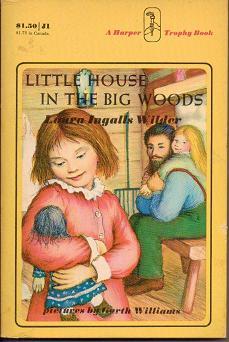
This is the very edition we have: I am fond of it.

Little House in the Big Woods by Laura Ingalls Wilder

I chose this book because I have been itching to read the whole Little House series to my children and I believe my five-year-old is old enough to appreciate it. They both listen very well to it when I read aloud at breakfast time.


The Little Engine That Could by Watty Piper

We have had this book forever but my toddler just noticed it and has taken a liking to it. Classic! I guess it goes along with his preference for playing with his train sets every day. :)


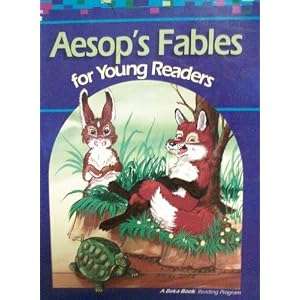
Aesop's Fables for Young Readers edited by Laurel Hicks

Everyone has to learn the morals in Aesop's Fables, am I right? These fables are short (bonus), about animals (bonus), illustrated in a way that captures my children's interest (bonus), and include questions at the end of each story that my older child can answer (bonus). Four bonus points!!


Toot & Puddle: I'll Be Home for Christmas by Holly Hobbie

I love the Toot & Puddle books. The illustrations are gorgeous and heartwarming. The stories demonstrate the virtues of adventurousness, loyalty, friendship, love for the environment (both natural and cultural), and domesticity - all without using unnecessary words. The characters' actions and conversations, both written and spoken, are the story.

So I am in love with the Toot & Puddle books. I have to say, though, that my toddler is not as interested in I'll Be Home for Christmas. He loved the book named simply Toot & Puddle. Interestingly, these books are advertised as being for ages 4-8. My five-year-old likes them fine but doesn't ask for me to read them.

My toddler also likes to look at grocery store circulars and magazines with me, because both types of publications show plenty of food. Food is the theme of his life.

Related Posts Plugin for WordPress, Blogger...