Friday, May 27, 2011

Winter Fun in the Summertime

Some of us live in climates where the heat of summer is more punishing than the cold of winter.

During the winter season, there are posts everywhere to help families have fun when it's just too cold to take the children outside.

Let's twist that and talk about finding fun when it's just too hot to take the children outside. 


In the summer, those who live in hot climates will still have their share of picnics and water play...heavily shaded with sunblock or clothing, of course. (Especially if your family has fair skin and a history of melanoma like ours does.)

But what to do when no one wants to go outside or when the temperature is actually dangerously hot?

My Number One Summer Tip for Parents In Hot Climates:

Take another look at those winter activity posts and do them now!

Image courtesy of clker.com


Some involve snow play, which won't be possible, but even those can be tweaked. Get creative, and don't forget to ask your children for input.

Activities:

1. One example of a winter post I found useful in summer was Surviving Winter: Bath Play from Children's Learning Activities.

2. Another way to do water play while avoiding the glaring sun is to locate the indoor pools and water parks near your home. Does your YMCA have an indoor pool?

3. Now that it's summer, get serious about checking out those museums you've been wanting to take your children to. Don't forget to look up "free museum days" for the museums near you.

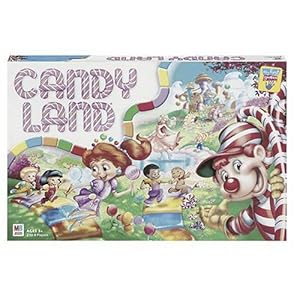
4. You know those vintage-y pictures of people by the fireside drinking hot cocoa and playing games? Make homemade slushies (from The Motherload) or old-fashioned lemonade instead to drink while you play Uno, Settlers of Catan, or Candy Land.


5. Movie Marathon! You could go two ways with this: Either watch everyone in the family's favorite summer movie or make a list of favorite winter movies and watch those.

6. Go to the library. The local library might be our country's most underused resource for the number and value of programs it usually offers. Pick up a copy of the summer calendar.

7. Get a head start on Christmas by holding a Christmas Planning Day. This could be combined with #5 for great ambience if you choose to watch favorite winter movies. Everyone can make a list of things they'd like to make or buy for other people. After the lists are completed, plan to go garage-sale-ing to look for bargains or start your homemade projects.

And of course, get outside when it's not dangerous and not quite as punishing!

I will elaborate on each of the examples above as summer gets underway, so look for those Winter Fun in the Summertime posts.

Thursday, May 26, 2011

Must Have: A Store of Knock-Knock Jokes

My son has just gotten to the age when he wants to tell and hear knock-knock jokes several times a day. Any parent of a five-year-old needs a good store of knock-knock jokes. Right? I know I'm not the only parent of a five-year-old who has run into this.

I ran out of knock-knock jokes.

So I went hunting online and this site has a few good ones in the comments. It's not a joke site but it yielded some good results for my challenge.

One of my favorites from that site - because my son actually gets it instead of just laughing because he thinks we're being silly - is this one:

"Knock knock."

"Who's there?"

"Interrupting cow."

"Interrupt-"

"MOOOOOOOOOOO!"

My personal favorite - because I could remember it when my son suddenly wanted to do knock-knock jokes - is this:

"Knock knock."

"Who's there?"

"Boo."

"Boo who?"

"Please don't cry, sweetheart!"

The orange-you-glad-I-didn't-say-banana one is appreciated but not understood around here.

This site has lots more knock-knock jokes that children would find funny, though maybe not adults.

Tuesday, May 24, 2011

One Hungry Mama Blog

I know this blog is not about food or cooking, but you really must look at this quality blog by a Brooklyn mom who used to, among other things, create educational TV for Sesame Street Workshop. Her site, One Hungry Mama, is full of recipes I would be proud to serve my family and there are some helpful back-to-school lunch posts there, too!

Her tagline is: "Kids change the way we cook, but they don't have to change how well we eat."
 
I found out about the website through my lovely sister-in-law who is helping to design the charity cookbook for Japan that you will see highlighted on the site.

To keep it about learning activities, check out this post where One Hungry Mama shares a "recipe" for a truly edible finger paint.

Storybook Week 7: Harold and the Purple Crayon

This week the storybook is Harold and the Purple Crayon, written and illustrated by Crockett Johnson.


1. Read the Book
Language Arts/Story Interest


Together with your child, read the book or watch the storybook video.


2. Make a Safety Town
Arts and Crafts/Safety/Dramatizing/Pretend Play

In Harold and the Purple Crayon, Harold decides he needs a moon, so he draws one. He needs a path, so he draws one to walk down. Through his adventure, he keeps hold on his purple crayon so that he can create what he needs, whether it be a shortcut across a field or a whole city. This is a powerful concept for children. The idea that they can create the world they want to play in through their imaginations is a breathtaking one.

I like this Safer Strangers, Safer Buildings video from Child's Eye Media to combine safety information for young children with a way to play pretend with these new ideas. Look at the end of Part 2 to see the safe buildings the children make to create a safe town. It looks like they are making the buildings out of small cardboard boxes about the size of instant oatmeal boxes. The boxes are covered with white paper so that the children can draw any embellishments or signs they like on their buildings. Adding people and vehicles to the town would of course make it even more fun.

3. Purple Paper Night Sky
Arts and Crafts

Your child may want to draw with a purple crayon after reading this book. That would be fantastic; let your child do what he or she likes with a purple crayon and paper. Be prepared for a nice story about what is being drawn.


A different activity for children who are not interested in a purple crayon is to use purple construction paper and white chalk to make a night sky. The texture of chalk on construction paper can be a learning experience in itself.

For a baby or toddler: Allow your baby or toddler to use chalk on construction paper if baby is old enough to safely hold and use chalk. Your toddler may be quite fascinated with making white marks on a colored paper instead of the other way around.

For a preschooler: Ask your child to draw stars and a moon on your purple paper to make a night sky. You might even add to the picture yourself.


For an older child:
Combine learning about constellations with drawing some on the paper. If you have not already learned together about constellations, look up some pictures of constellations in the sky. For this arts and crafts activity, have your child make up his or her own constellations and name them.


4. Sailboats
Story Interest/Science

Harold draws a sailboat and sails across water. How does a sailboat work? What makes it go?

Explain that a sailboat needs its sails to be up so that wind can blow the sails and push the boat.

For a toddler or preschooler: Find two plastic bath toy boats, one with a sail and one without. Draw a bath, put your child in, and do an experiment. First put in the boat without a sail. Blow on it. Allow your child to blow on it too. The breath might move it a little bit but likely won't push it forward very far. Now take that boat out and put in the boat with the sail. Blow on the sails. This boat should move forward much more easily because there is wind in its sails.

For an older child: Have your child build a sailboat. Here is a link to a 5th Grade Sail Boat Project.


5. Finding Your Room
Geography/Story Interest/Physical Activity

Start in your child's bedroom. Now lead him or her out to another room. Instruct your child to go back to the bedroom. Ask how they found it. Go to another room. Tell your child to get back to the bedroom as quickly as possible. Try this from one other room.

For a toddler: Do the above activity, emphasizing which room is your toddler's room. Have fun with it! If your toddler needs an extra challenge, try it with all the lights out and a flashlight.

For a preschooler: Do the above activity, asking your child which direction they are going as they navigate to their room. Do the flashlight variation because a preschooler will be delighted with it!

For an older child: Have your child first walk back to the room, then sit down somewhere and draw a map to show the way they walked. This map can be as simple or as elaborate as necessary. Some preschoolers can do this activity.


Note: Anytime you or your child gets excessively frustrated with an activity, take a deep breath and remember the purpose of the activity. Some of your purposes may be: To teach, to learn, to have fun, to spend quality time together, and to evaluate your child's abilities. It is usually better to avoid an outburst of frustration with each other than to complete an activity. Sometimes just taking that breath, looking each other in the eyes, and thinking for a moment about the real issue bothering one (or more) of you is extremely valuable.

Monday, May 23, 2011

Bedtime Routines


PowerLaunch recently posted about The Power of Routines, including a poignant passage about the power of a bedtime routine.

Our youngest is a great sleeper. People always comment on how he goes straight to sleep when we put him down. This usually happens even when we are in a new environment like visiting in someone else's home. What he has is a bedtime routine that has been the same from about two months old until the present time, twenty-three months old. That is twenty-one months of the same routine for each nap and each bedtime. If I did my math correctly, that is over 1,600 occurrences of the same ritual.

We do a bath every other day, followed by diaper and pajamas, followed by tooth brushing and flossing, followed by zero to three bedtime books (depending on the day). Then he has the same lullaby sung to him and he is laid down on his bed with the same litany describing his bedtime objects. His music box is then turned on and I say the very same good night message to him.

Any bedtime routine that includes healthy wind-down activities and an expression of love is a fantastic bedtime routine.

What is your child's or children's bedtime routine?

Wednesday, May 18, 2011

A Sensory Experience Craft

Aprile at The Steady Hand recently did a review of the Deluxe Textured Craft Kit from 1-2-3! Textured Products. If you have a child who would benefit from working with a variety of textures, this kit or something similar could be a great activity.

This kind of kit is also something that could be made at home after collecting a variety of materials from craft stores and around the house.

If you go to The Steady Hand's post, you can see how she and her daughter used the Hugs the Hippo kit.

Tuesday, May 17, 2011

Three Ways to Teach Children a Work Ethic

A work ethic is something most parents want their children to learn. Here are three ways to begin to instill one in your child.

1. Start Early with Cleaning Up.

Every time your baby plays with toys, have a clean-up time when it's time to move on to something else. You might use a clean-up song to sing each time. Definitely use the term "cleaning up," even to your tiny baby.

You will start by cleaning up all the toys yourself. Do it cheerfully to show that it is a good and fun thing. As baby gets older, he or she can have a turn dropping a toy into a basket. You and your baby or toddler can take turns dropping one toy into the right place. Saying, "My turn! Your turn! My turn!" etc. also sets up the concept of sharing and taking turns for later lessons.

Each time playtime is over, have your child pick up toys. You can either cheerfully help or limit the number of toys available to a number that your child can pick up on his or her own.

If you do these things every single time, your child will naturally learn to clean up, with a minimum of fuss and a maximum of cheerfulness. Okay, it may not work perfectly every time, but it does lay the right groundwork.

2. Be the Example.

Groan. Another hard thing to model for your children, right? Being the example is the best way to teach your children anything in the world. Show them what you do in your daily life. Later you can tell them why.

Do your tasks until they are finished. Let your children see you working. Try to maintain a cheerful (or at least neutral) demeanor while working. Note: For me, these are things I have to work on continually. Keep in mind that, just as you are not perfect, neither will your children be. (Thank you, Chronicles of a Babywise Mom, for that good lesson.)

3. Trade help.

By the time your child is a preschooler, he or she can help you out in many ways. Babies can help pick up in the manner described above, and toddlers can help, too. Some toddlers can fold washcloths, some can sort laundry, some love to unload the dishwasher with you, and some can set dinner utensils on the table.

Next time your child asks for your help, help him or her. Ask him or her to agree to help you next time you need help. All of this should be done and said in as chipper a tone as possible. Get your child's agreement.

The next time you do a task that your child could possibly help with, ask him or her to help you. Give a reminder of how you helped them and asked for their help in the future. Use their help!

Depending on the age of the child, you might not want to require more than five minutes of help. You want this to end on a positive note, with all people feeling proud of themselves. On the other hand, if you have hard workers who can do more than five minutes, have them do as much as they can so that they have something legitimate to be proud of.
Related Posts Plugin for WordPress, Blogger...